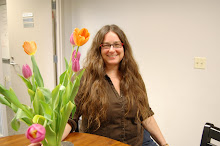
Too much travel in too short a time. I could afford the trip by being willing to connect all over the place. In the last 24 hours, I flew from Exeter to Dublin to Milan to Munich to Copenhagen to Karup, then drove to Holstebro.
My body has shut down. Cough, runny nose, and a desperate need to sleep. Which I'm off to do, now that my washing has finished.
Tomorrow I fly home. Karup to Copenhagen
toooooooooooooooooooooooooooooooooooooo
ooooooooooooooooooooooooooooooooooooooo
ooooooooooooooooooooooooooooooooooooooo
ooooooooooooooooooooooooooooooooooooooo
ooooooooooooooooooooooooooooooooooo Seattle.
Friday, May 13, 2005


Thursday, May 12, 2005
Hallelujah
I am yearning for beauty. Can't find the Li Po poem I want, so here is a gorgeous bleak Hallelujah. They played it an hour ago in this Dublin airport internet cafe and I can't shake it.
I've heard there was a sacred chord
that David played, and it pleased the Lord
But you don't really care for music, do ya?
It goes like this: The fourth, the fifth
The minor fall, the major lift
The baffled king composing "Hallelujah"
Hallelujah, Hallelujah, Hallelujah, Hallelujah
Your faith was strong, you needed proof,
You saw her bathing on the roof
Her beauty and the moonlight overthrew ya
She tied you to the kitchen chair,
She broke your throne, she cut your hair
And from your lips she drew the Hallelujah
Hallelujah, Hallelujah, Hallelujah, Hallelujah
Maybe I've been here before,
I know this room, I've walked this floor
I used to live alone before I knew ya
I've seen your flag on the marble arch
Love is not a victory march
It's a cold and it's a broken Hallelujah
Hallelujah, Hallelujah, Hallelujah, Hallelujah
There was a time you let me know
What's really going on below,
But now you never show it to me, do ya?
I remember when I moved in you,
Your holy dark was moving, too
And every breath we drew was Hallelujah
Hallelujah, Hallelujah, Hallelujah, Hallelujah
Maybe there's a God above,
And all I ever learned from love,
Was how to shoot at someone who outdrew ya
It's not a cry you can hear at night,
It's not somebody who's seen the light,
It's a cold and it's a broken Hallelujah
Hallelujah, Hallelujah, Hallelujah, Hallelujah
Hallelujah, Hallelujah, Hallelujah, Hallelujah
-- Leonard Cohen
Grotowski, 36 just men
I am reading the memorial service held in New York, in 1999, for Polish Laboratory Theatre director Jerzy Grotowski who had recently died.
Theater has been a great adventure in my life, it has conditioned my way of thinking, my way of seeing people and looking at life. But I didn't look for theater. In reality I always have been looking for something else. But I would say that my language has been formed by theater.
When I was young I asked myself what would be a possible job that would enable me to look for the other one and myself, to look for a dimension of life that would be rooted in what is normal, organic, even sensual, but that would go beyond all this, that would have a sort of axis, another higher dimension that would surpass us.strong
At that time, I wanted to study either Hinduism, to work on the different techniques of yoga, or medicine, to become a psychiatrist, or dramatic art to become a director. It was the Stalinist period, censorship was very heavy. Performances were censored, but not rehearsals and the rehearsals have been for me the most important thing. There something happened between a human being and another human being, that is the actor and myself that touched this axis beyond any control from the outside.
It means that the performance has always been less important that the work in the rehearsals. The performance had to be impeccable, but I always went back towards the rehearsals even after the premiere because the rehearsals have been the great adventure. In the end, it has been this search for the human being in the others and in myself that lead me to theater. But it could have lead me to psychiatry or to the study of yoga.
When I was young I had a professor who gave me private lessons without being paid. He was a great wise man and a specialist in Hinduism. When I began doing theater, I invited him to a performance but he refused. Why, had he refused, I asked him? He said, 'Because no matter what you do, it will transform itself into a hermitage.' Now I find myself with my present work, beyond performance and any public work, with the artists looking for this interior axis, I find myself, as he was saying, in an hermitage.
-- Jerzy Grotowski
In my tradition, there is a spiritual understanding that there are always thirty-six just men in the world. These thirty-six do nothing less than keep alive the searches and the world of God. I have no doubt that Jerzy was one of the thirty-six.
-- Bill Reichblum
One of the many stories Jerzy loved was the story of Bal Shem Tov who went to a certain place in the forest, lit a fire in a specific way and practiced a specific meditation of prayer. Over a long period of time, after his passing, the specific words of the prayer were lost. Then the specific way of lighting the fire was lost. Then even the specific place in the forest was lost. This could be perceived as a disaster, a complete break from the past. However, the lesson is that this was not the case, because at least, we still have the story.
-- Bill Reichblum
Wednesday, May 11, 2005
Exeter
I talked with Phillip Zarilli about psycho-physical practice. Buddhism came up over and over, as did Polish theatre companies, Gardzienice, Odin, singing, the Dalai Lama, Kalachakra Initiations, Asian cultures, African, ancient Athenic military training.
I met with three Exeter PhD students. This is how they typically structure their programs:
I am about to begin the long unspooling of returning to each previously-visited city for a day or less -- which is how I was able to afford the trip.
I can't wait to get to Holstebro. Where there is a washing machine, a hard bed, good work, and silence.
I met with three Exeter PhD students. This is how they typically structure their programs:
- Before coming: Research Question. Decide specifically what you plan to explore. How you plan to do & document it. It can be any project(s), anywhere in the world, with anyone, as long as it is related to theatre, has a practice ("doing") component, and is justified in terms of your inquiry.That's a good structure for me. Consistently, however, I feel more at home in the companies than the schools.
- 1st year: Foundation. Prepare, do background reading, learn methodologies, organize the projects and people, plan the trips.
- 2nd year: Research. Go do the projects. Document them, on DVD, a journal, photos.
- 3rd year: Write thesis. Put your findings in context, cite the main papers in the field, pass your exams, get your committee's approval.
- 4th year, if needed: Finish thesis.
I am about to begin the long unspooling of returning to each previously-visited city for a day or less -- which is how I was able to afford the trip.
I can't wait to get to Holstebro. Where there is a washing machine, a hard bed, good work, and silence.
Monday, May 09, 2005
There are other earths and skies than these
Awake all night again. My body refuses to leave Seattle time. Normally I adapt in 2 days.
I think it's because this time I cannot forget the broader currents of my life. I think about it all -- how to set up & light my office, structure my days, tackle my projects, lay foundations, plan my course.
A baby is squalling, a street-grinder is whining, a bus's brakes squeal as it stops outside the internet cafe's open door, and the techno beat drives. "Uhh- tigguh-zoop-tigguh-Rolling. Uhh- tigguh-zoop-tigguh-Rolling. Uhh- tigguh-zoop-tigguh-Rolling. Uhh- tigguh-zoop-tigguh-Rolling. Uhh- tigguh-zoop-tigguh-Rolling."
I have been awake 32 hours.
I think it's because this time I cannot forget the broader currents of my life. I think about it all -- how to set up & light my office, structure my days, tackle my projects, lay foundations, plan my course.
A baby is squalling, a street-grinder is whining, a bus's brakes squeal as it stops outside the internet cafe's open door, and the techno beat drives. "Uhh- tigguh-zoop-tigguh-Rolling. Uhh- tigguh-zoop-tigguh-Rolling. Uhh- tigguh-zoop-tigguh-Rolling. Uhh- tigguh-zoop-tigguh-Rolling. Uhh- tigguh-zoop-tigguh-Rolling."
I have been awake 32 hours.
They ask me why I live in the green mountains.
I smile and don't reply; my heart's at ease.
Peach blossoms flow downstream, leaving no trace --
And there are other earths and skies than these.
-- Li Po
Sunday, May 08, 2005
Your body is the gate (sestina)
To travel much in time and not in space
Is harder than the pilgrim's wandering lot
Choose any country for your company's base
The funds will be your first and biggest gate
Your life, there comes a point you must oblige
Or miss the ferryman and his sweet yacht
Forty years of winds have brought this yacht
Your purity has bought for it a space
It will not stay for asking or oblige
You must take the decision, cast your lot
Say no protective chants, approach the gate
Take off your clothes, step naked on the base
When you are whole, your heart's your only base
Green waters close around you, vanished yacht
Your trembling truth is all the paltry gate
But that's enough to point you to a space
Use everything you know, embrace your lot
Be tender and be strong, be true, oblige
Devote yourself, vow that you will oblige
The stranger at the door who seems so base
Your candlesticks of gold may be his lot
But ethics and self-care your nimble yacht
YOU MUST LEARN TO SING -- send into space
Vibration which itself becomes the gate
Commitment to yourself reveals the gate
It asks that you your yearnings soft oblige
Hold nothing back from love's fresh-flowering space
A tender heart knows nothing can be base
When nourished, you become a straight swift yacht
Coursed true in mildest winds, or stormy lot
Integrity is now your faithful lot
You must obey the secrets of your gate
This, even if it means you lose the yacht:
Reveal your thoughts, grace all whom you oblige
The gods will send sweet partners for your base
And for your inmost heart, a husband's space
Your body is the gate you must oblige
To stretch a lot, touch, kiss, and stride is base --
This yacht is your sole chariot through space
Is harder than the pilgrim's wandering lot
Choose any country for your company's base
The funds will be your first and biggest gate
Your life, there comes a point you must oblige
Or miss the ferryman and his sweet yacht
Forty years of winds have brought this yacht
Your purity has bought for it a space
It will not stay for asking or oblige
You must take the decision, cast your lot
Say no protective chants, approach the gate
Take off your clothes, step naked on the base
When you are whole, your heart's your only base
Green waters close around you, vanished yacht
Your trembling truth is all the paltry gate
But that's enough to point you to a space
Use everything you know, embrace your lot
Be tender and be strong, be true, oblige
Devote yourself, vow that you will oblige
The stranger at the door who seems so base
Your candlesticks of gold may be his lot
But ethics and self-care your nimble yacht
YOU MUST LEARN TO SING -- send into space
Vibration which itself becomes the gate
Commitment to yourself reveals the gate
It asks that you your yearnings soft oblige
Hold nothing back from love's fresh-flowering space
A tender heart knows nothing can be base
When nourished, you become a straight swift yacht
Coursed true in mildest winds, or stormy lot
Integrity is now your faithful lot
You must obey the secrets of your gate
This, even if it means you lose the yacht:
Reveal your thoughts, grace all whom you oblige
The gods will send sweet partners for your base
And for your inmost heart, a husband's space
Your body is the gate you must oblige
To stretch a lot, touch, kiss, and stride is base --
This yacht is your sole chariot through space
Gong
Today I am a gong rung seven times.
In the morning I prepared for Eugenio. I had assembled a book of Odin blog posts, and brought a copy of Himalaya, the astounding photos on which my play Nanda Devi was based. "These are very unusual," he said, looking slowly. "Nothing like what you imagine when you think of a mountain." "Truths," I said. "Truth on every page."
I saw
This afternoon I got my time with Eugenio. I came on this whole trip to speak to him, I realized.
I knew tons, right away. I couldn't write fast enough. I fell for two hours into deeper and deeper sleep, before staggering back for Cities Under The Moon. Where I knew more. And more. And more.
I need a huge canvas, tons of paint, and days and days to get lost in. Green, it whispers, emerald green, glitter green like that Byzantine cathedral, put the cathedral on top of his head, gorge on detail.
I am stronger now. I rise farther into the indigo sky. I don't even try to keep up anymore, I just shed and fall toward Saturn.
When the old ways can't get you there, use new ones.
In the morning I prepared for Eugenio. I had assembled a book of Odin blog posts, and brought a copy of Himalaya, the astounding photos on which my play Nanda Devi was based. "These are very unusual," he said, looking slowly. "Nothing like what you imagine when you think of a mountain." "Truths," I said. "Truth on every page."
I saw
- a film of Grotowski's Cieslak, training TageBam. Bam. Bam. Three generations of lineage; four with Grotowski, five with me.
- a film of Iben training in front of Eugenio
- Tage training Mia, using techniques of Cieslak, Iben, & Grotowski
- Iben speaking to Mia afterwards, clarifying a step
This afternoon I got my time with Eugenio. I came on this whole trip to speak to him, I realized.
I knew tons, right away. I couldn't write fast enough. I fell for two hours into deeper and deeper sleep, before staggering back for Cities Under The Moon. Where I knew more. And more. And more.
It doesn't do any good to list it, when miracles and thunders come so fast.I am supposed to leave tomorrow. I need to paint.
I need a huge canvas, tons of paint, and days and days to get lost in. Green, it whispers, emerald green, glitter green like that Byzantine cathedral, put the cathedral on top of his head, gorge on detail.
I am stronger now. I rise farther into the indigo sky. I don't even try to keep up anymore, I just shed and fall toward Saturn.
When the old ways can't get you there, use new ones.
Friday, May 06, 2005
We don't know what we're making
We don't know what we're making when we're making it. We don't know what we've made when we are done. Even those watching sometimes cannot see what we have made -- they can only feel their own reactions to it.
The Odin's Anderson was of the same shimmering density as Kama Ginkas's Chekhov -- Rothschild's Fiddle -- or Leonid Anisimov's Lower Depths. Soft supple master actors, and shining layers of reality piled up and vibrating until without noticing you are inside the poem; you have become the haunting.
The whole thing cracks, and you with it. This happens in many Odin pieces. It's not a conscious, or consciously constructed thing. It is the result of many truths. The first several jar you from your surety, then one detail jolts you agape. You are like a door, swinging on its hinges -- and then you have no door.
There was no happy ending. "And no tragic one either," said Eugenio. This is a formidable accomplishment. I felt echoes of Hans Christian's loneliness -- or mine. There were explosions of stillness where I could breathe. Snow. A sound like boulders singing. Trees scraping their branches. A man with Kantorian repetitiveness, swinging, swinging, kicking his knees and swinging.
But mostly, there was that vibration and sundering that means the piece has broken you tender. You know it's a woman in a red dress with a white mask and a mandolin, and yet the third time she passes, she's the only real thing in the space -- neither the walls, nor the spectators, nor you yourself are real, compared to that lost planet, lost fragment of time, which orbits singing.
They say that children who have known loss draw trees with holes in them. I think Eugenio has people being shot for the same reason -- it feels actual.
It was a fractal. The whole play felt like Andersen, and each of its pieces came from his stories. Same with Chekhov -- his moments and his plays feel like his life.
And then there were the deeper reverberations because of the given circumstances -- the exoticism that comes with taking the play out of its home, and placing it in new surroundings. This only happens if you have shown your home faithfully.
"My wife left me," says the furrier in Lower Depths, "For another furrier who had better pelts."
Snow in Denmark is normal; in the Italian summer, it is exotic. The way the Odin sings in their own halls is usual; in an old church in Bergamo it is strange, untraceable. The way the zanni move their hands -- a motion that once was winding yarn, and now has become pure glyph -- echoes in our hindbrains.
At one point an actor on top of the end-bridge dropped a grenade into the snow-lit entrance. We all turned at the sound. It lay like a pine cone, inert, spotlit. The onstage actor addressed it, finished, left. Then a girl spectator leaned over and picked it up. It was not a grenade or a pine-cone after all -- nor even part of the performance. It was her cell-phone.
You could not think up all the things in Andersen. You could only discover them iteratively by doing.
What I noticed about the chapel across the street was how real each stone was. Someone decided to make a dome. Someone decided to make a line of small vertical bricks, this far apart, as the trim. Someone decided to put this stone here, and that one next to it. The moments of the Odin play were as precisely chosen as that chapel.
There is no blurriness in art -- only choice, far commitment, integrity. Art is the search; it is left to the observer to name, to infer, to interpret the metaphor which remains as a by-product of that search. "Every track ends, finally, with the skull," says Tom Brown, the Native-American-raised author of Tracker.
Truthful search leaves in its wake reverberation -- loose ends, associations, paradoxes unresolved, possibly undiscovered.
We don't know why Hans Christian kept making paper cut-outs. We just felt them suddenly splash over us, projected silhouettes on every wall and mirrored roof and floor, across our bodies and faces -- a hall of silent alleluia. No one ever explained. We just gazed, absorbed.
"Whatever you least expect, that is what will happen next," said R.A. MacAvoy out of the blue, a one-sentence paragraph in one of her books. It was the only time she spoke in that voice in the entire trilogy -- and even with that forewarning, what came next was unexpected.
The Odin's Anderson was of the same shimmering density as Kama Ginkas's Chekhov -- Rothschild's Fiddle -- or Leonid Anisimov's Lower Depths. Soft supple master actors, and shining layers of reality piled up and vibrating until without noticing you are inside the poem; you have become the haunting.
The whole thing cracks, and you with it. This happens in many Odin pieces. It's not a conscious, or consciously constructed thing. It is the result of many truths. The first several jar you from your surety, then one detail jolts you agape. You are like a door, swinging on its hinges -- and then you have no door.
There was no happy ending. "And no tragic one either," said Eugenio. This is a formidable accomplishment. I felt echoes of Hans Christian's loneliness -- or mine. There were explosions of stillness where I could breathe. Snow. A sound like boulders singing. Trees scraping their branches. A man with Kantorian repetitiveness, swinging, swinging, kicking his knees and swinging.
But mostly, there was that vibration and sundering that means the piece has broken you tender. You know it's a woman in a red dress with a white mask and a mandolin, and yet the third time she passes, she's the only real thing in the space -- neither the walls, nor the spectators, nor you yourself are real, compared to that lost planet, lost fragment of time, which orbits singing.
They say that children who have known loss draw trees with holes in them. I think Eugenio has people being shot for the same reason -- it feels actual.
It was a fractal. The whole play felt like Andersen, and each of its pieces came from his stories. Same with Chekhov -- his moments and his plays feel like his life.
And then there were the deeper reverberations because of the given circumstances -- the exoticism that comes with taking the play out of its home, and placing it in new surroundings. This only happens if you have shown your home faithfully.
"My wife left me," says the furrier in Lower Depths, "For another furrier who had better pelts."
Snow in Denmark is normal; in the Italian summer, it is exotic. The way the Odin sings in their own halls is usual; in an old church in Bergamo it is strange, untraceable. The way the zanni move their hands -- a motion that once was winding yarn, and now has become pure glyph -- echoes in our hindbrains.
At one point an actor on top of the end-bridge dropped a grenade into the snow-lit entrance. We all turned at the sound. It lay like a pine cone, inert, spotlit. The onstage actor addressed it, finished, left. Then a girl spectator leaned over and picked it up. It was not a grenade or a pine-cone after all -- nor even part of the performance. It was her cell-phone.
You could not think up all the things in Andersen. You could only discover them iteratively by doing.
What I noticed about the chapel across the street was how real each stone was. Someone decided to make a dome. Someone decided to make a line of small vertical bricks, this far apart, as the trim. Someone decided to put this stone here, and that one next to it. The moments of the Odin play were as precisely chosen as that chapel.
There is no blurriness in art -- only choice, far commitment, integrity. Art is the search; it is left to the observer to name, to infer, to interpret the metaphor which remains as a by-product of that search. "Every track ends, finally, with the skull," says Tom Brown, the Native-American-raised author of Tracker.
Truthful search leaves in its wake reverberation -- loose ends, associations, paradoxes unresolved, possibly undiscovered.
We don't know why Hans Christian kept making paper cut-outs. We just felt them suddenly splash over us, projected silhouettes on every wall and mirrored roof and floor, across our bodies and faces -- a hall of silent alleluia. No one ever explained. We just gazed, absorbed.
"Whatever you least expect, that is what will happen next," said R.A. MacAvoy out of the blue, a one-sentence paragraph in one of her books. It was the only time she spoke in that voice in the entire trilogy -- and even with that forewarning, what came next was unexpected.
Bergamo birthday, glimpses of Eugenio
"No, no," said the taxi driver. "Arlecchino no from Bergamo. Arlecchino from leetle leetle village BY Bergamo. I no remember the name." That is even more beautiful -- that Harlequin is not from a small town after all, but from an even smaller place outside it.
Those of us who grew up in the country, 20 miles away from the place outside the small town, understand perfectly.

This is Bergamo. Behind you, out of town, lie tall grassy fields, leafy trees with black trunks, a river.


This is where Odin performed Anderson's Dream, the grey building on the left. Unbelievable stones, acoustics, archaic human theatrical scale.

This is the chapel you see through the arch, as you wait for Anderson to open its doors.

This is the courtyard of the university, built in an ancient church, Sant' Agostino. The inner secret courtyard, which you only find if you continue past beyond the first algae-stoned dilapidated one. It is far more ruined that it appears here -- and more powerful. This space cries for Greek theatre.
And this -- imagine jeans, brown & pink flowy v-necked top, black jacket -- is me on my 48th birthday. Standing in soft air, singing in a high almost soundless voice, waiting for Andersen . Doing slowtens from the infinite sky of the piazza, toward the baroque chapel, singing. Sitting with Mia, who bought me a strawberry & chocolate ice cream & capuccino, and gave me a yellow rose. Watching the snow drift earthward in Andersen, and realizing how Danish, which sounds normal in Holstebro, sound absolutely mysterious in Italy.
Thinking.
Feeling.
Reverberating.
I listened to Eugenio's talk at the conference today. I was glad to hear him in his native tongue, on his native soil. He looked slim, imperative, clear. It was his own legend he told, of coming to Norway, to Poland, to Grotowski, to the Odin.
Listening to Italian is like watching fish from the dock. I catch only glimpses, sometimes a sighting. I get 30-40%. I catch adjectives, miss nouns.
At one point he was describing how he and Grotowski would converse. "But then I realized," he said, "That everything about how we talked -- the vulgarities, the trivialities, the [---], the duration, how long we talked, everything -- was in fact an exact reflection of [---]." It KILLED me to miss that point. I was dying to know if he said, "of our process," or "of our company" or "of the production." Lost, vanished.
I asked Jusy afterward. "I do not remember this point," she said, rubbing her head and trying.
The mysteriousness... the incantation... Cyrano de Bergerac... my chest... the sonority... traditional theatre, very professional, very good professional actors... I had lost the sonority... Theatre of Art of Stanislavski... Vakhtangov... Kamerny Theatre... There was small book published in New York at this time, very important book. It described the famous conference where Meyerhold [---] and it said very clearly that [---]. This is incredibly important because [---]... She laid the table very particularly with many many points of [---]... Polish theatre school... Grotowski... I took comfort... I took solace... Grotowski does not say this to the actors of course, but to me he says [---]... The Polish think of themselves as the Pieta... the Polish believe very strongly that [---]... The scenographer of the Akropolis production was architect, genius. He had lived 4 years in Auschwitz and he [---] the tunnels, the boots... Grotowski and the actors, they absolutely [---]... the founding of the Odin was based on not, on negative... we all had jobs... the incantation... desperately... most extremely... I watch... the [---] of gold... closed/ended...
Ferme. Perdido. Sonorite. Extremissimo. Teatro. Quanto. Que. Mysterioso. Molto, molto. Polognie. Pollacka.
Today is my compleano.
Those of us who grew up in the country, 20 miles away from the place outside the small town, understand perfectly.

This is Bergamo. Behind you, out of town, lie tall grassy fields, leafy trees with black trunks, a river.


This is where Odin performed Anderson's Dream, the grey building on the left. Unbelievable stones, acoustics, archaic human theatrical scale.

This is the chapel you see through the arch, as you wait for Anderson to open its doors.

This is the courtyard of the university, built in an ancient church, Sant' Agostino. The inner secret courtyard, which you only find if you continue past beyond the first algae-stoned dilapidated one. It is far more ruined that it appears here -- and more powerful. This space cries for Greek theatre.
And this -- imagine jeans, brown & pink flowy v-necked top, black jacket -- is me on my 48th birthday. Standing in soft air, singing in a high almost soundless voice, waiting for Andersen . Doing slowtens from the infinite sky of the piazza, toward the baroque chapel, singing. Sitting with Mia, who bought me a strawberry & chocolate ice cream & capuccino, and gave me a yellow rose. Watching the snow drift earthward in Andersen, and realizing how Danish, which sounds normal in Holstebro, sound absolutely mysterious in Italy.
Thinking.
Feeling.
Reverberating.
I listened to Eugenio's talk at the conference today. I was glad to hear him in his native tongue, on his native soil. He looked slim, imperative, clear. It was his own legend he told, of coming to Norway, to Poland, to Grotowski, to the Odin.
Listening to Italian is like watching fish from the dock. I catch only glimpses, sometimes a sighting. I get 30-40%. I catch adjectives, miss nouns.
At one point he was describing how he and Grotowski would converse. "But then I realized," he said, "That everything about how we talked -- the vulgarities, the trivialities, the [---], the duration, how long we talked, everything -- was in fact an exact reflection of [---]." It KILLED me to miss that point. I was dying to know if he said, "of our process," or "of our company" or "of the production." Lost, vanished.
I asked Jusy afterward. "I do not remember this point," she said, rubbing her head and trying.
The mysteriousness... the incantation... Cyrano de Bergerac... my chest... the sonority... traditional theatre, very professional, very good professional actors... I had lost the sonority... Theatre of Art of Stanislavski... Vakhtangov... Kamerny Theatre... There was small book published in New York at this time, very important book. It described the famous conference where Meyerhold [---] and it said very clearly that [---]. This is incredibly important because [---]... She laid the table very particularly with many many points of [---]... Polish theatre school... Grotowski... I took comfort... I took solace... Grotowski does not say this to the actors of course, but to me he says [---]... The Polish think of themselves as the Pieta... the Polish believe very strongly that [---]... The scenographer of the Akropolis production was architect, genius. He had lived 4 years in Auschwitz and he [---] the tunnels, the boots... Grotowski and the actors, they absolutely [---]... the founding of the Odin was based on not, on negative... we all had jobs... the incantation... desperately... most extremely... I watch... the [---] of gold... closed/ended...
Ferme. Perdido. Sonorite. Extremissimo. Teatro. Quanto. Que. Mysterioso. Molto, molto. Polognie. Pollacka.
Today is my compleano.
Thursday, May 05, 2005
Rolling the die
I am looking at two large white lilies, still fresh on the bibliotek table. I have just cleaned the kitchen, washing many small glasses of Italian coffee. Emanuella made me lunch with brie cheese, and showed me pictures of Dawid, her garden, her room, her escutare, her friends. It made me wish I had pictures to share. Francesca just printed two research papers for me to read. Small treasures from the mountain to be archived.
It is silent at the theatre today. A Danish holiday celebrating Denmark's return to sovereignty, after being ruled by Germany for 5 years. Last night in town all the stores were open late, a band was playing, you could fish for wriggling wind-up plastic fish in a blue blow-up water-pool outside the toy store, and crowds were eating ice cream and thronging. At the bookstore, they had a small die in a leather cup. You rolled the die to see how much percent off your purchase you got -- 10% up to 60%. You could roll per item, or once per the whole set. I got 30% off everything.
Lili and I were relieved to return from town. It is like coming home to the monastery, to return here. Silent, sweet, carved powerfully deep by the intention, attention, and work.
Work is the core.
I can't start thinking, I must pack.
It is silent at the theatre today. A Danish holiday celebrating Denmark's return to sovereignty, after being ruled by Germany for 5 years. Last night in town all the stores were open late, a band was playing, you could fish for wriggling wind-up plastic fish in a blue blow-up water-pool outside the toy store, and crowds were eating ice cream and thronging. At the bookstore, they had a small die in a leather cup. You rolled the die to see how much percent off your purchase you got -- 10% up to 60%. You could roll per item, or once per the whole set. I got 30% off everything.
Lili and I were relieved to return from town. It is like coming home to the monastery, to return here. Silent, sweet, carved powerfully deep by the intention, attention, and work.
Work is the core.
I can't start thinking, I must pack.
Birthplace of the Harlequin
I'm off to Bergamo in 45 minutes. Bergamo is where Arlecchino, the Harlequin in commedia dell' arte, was born -- the archtypal Fool. I think it is an auspicious place to enter Italy.
I shall be attending a 3-day conference & work-demonstrations, "Conference At The Circumference," än exchange of theatre legends and practices. In the evenings, I'll see three of the Odin's performances:
I shall be attending a 3-day conference & work-demonstrations, "Conference At The Circumference," än exchange of theatre legends and practices. In the evenings, I'll see three of the Odin's performances:
Andersen's DreamI do not really take vacations. I take things like this -- intensive learning/growing experiences.
Inside the Skeleton Of The Whale
Cities Under The Moon
Wednesday, May 04, 2005
Hiding in plain sight
I just reread much of this blog. It feels like hiding in plain sight -- saying but not fully; not revealing.
I'm ready to say, precisely and completely.
A blog might not be the right forum.
I'm ready to say, precisely and completely.
A blog might not be the right forum.
Tuesday, May 03, 2005
Girl clothes
I bought new shirts and pants for my vacation. I am down two sizes from the last time I bought clothes. So I chose fitted tops -- sweaters, blouses. These only look right with good posture. So even though I'm sitting at a computer, now I sit straight.
This monitor is a foot too low.
Buckminster Fuller said no one could hear him, when he began speaking the truth, until he started wearing a suit. He went out and bought four identical black suits, and black glasses. It solved everything. He wore those (or their replacements) the rest of his life.
So here's what I brought:
This monitor is a foot too low.
Buckminster Fuller said no one could hear him, when he began speaking the truth, until he started wearing a suit. He went out and bought four identical black suits, and black glasses. It solved everything. He wore those (or their replacements) the rest of his life.
So here's what I brought:
pink tailored long-sleeve cotton blouseA new era, my friends. Girl clothes.
light green tailored cotton blouse (same cut)
black v-neck sweater
brown & pink knit scoop-neck top
pink & red knit scoop-neck top (same cut)
thin silky purple long-sleeve v-neck top
red BCC sweatshirt (for the plane rides)
Monday, May 02, 2005
There is only one thing you must do before you die
Holstebro is not different from Seattle, it just lies in a different place. My job still feels real here, my seshes, my kitchen dishes. The painting that is quivering there calls me to paint here --- but it is the same continuous urge, the same me.
The night we performed Noir, I stood in the rain, feeling made entirely of emerald. I feel that way almost all the time now. The corona of illusion is dissolving. What remains is real.
The night we performed Noir, I stood in the rain, feeling made entirely of emerald. I feel that way almost all the time now. The corona of illusion is dissolving. What remains is real.
There is only one thing you must do before you die.It is not, as I had thought, "Create a theatre." It is, "Become yourself."
Do not forget to do it.
A tree that must be taken special care of
There is a word in Swedish for trees that have grown very large. The word is vardtrad (with a little O over the first A, two dots over the second one), or literally, "Care-tree." It means, "A tree that must be taken special care of." If you buy a house, the real-estate listing shows photos of the house, the garden, the garage, and the vardtrads. A school might have one, or a neighborhood.
Leonid is a vardtrad. And Eugenio, and the Odin.
I love both the concept, and the fact that it's built into the language. You cannot say, "The big tree." You must say "The tree that must be taken special care of."
Leonid is a vardtrad. And Eugenio, and the Odin.
I love both the concept, and the fact that it's built into the language. You cannot say, "The big tree." You must say "The tree that must be taken special care of."
Sunday, May 01, 2005
It takes a theatre to raise an artist
When I lived at the Odin a year ago, I felt like a stranger. This time it feels like home. A group house I still belong to.
"There you are," said Lilicherie, as she showed me into the quiet two-bed room just off the music room. There is a shower-room outside mine, and a bathroom beside that. The music room has shining goldwood floors, drums, gongs, and ukeleles, two small worn Persian carpets, Grotowski posters, theatre posters from around the world. "A l'Odin," "Por Odin." During Odin Week, we set up picnic tables and tea stations to make it a dining room.
I can't believe the change in my spine. How relaxed it feels this time. "I need to paint here," I thought as I fell asleep.
Last year, so much in me was getting taken apart in me that I didn't know where it would stop. I was rigid, while disintegrating. When everything matters and you don't know what's important, you absorb it all. Perhaps the way the washcloths are folded is important, when they're taken from the dryer and carried in a small tan plastic basket to the shelf by the redbrick floor. Perhaps the secret lies in the tall narrow hall cupboard where the banquet candles and tea are kept. I grasped onto the tangibles as an anchor against the great intangibles which were destroying me.
Now, my unconscious understands. The way it understands my own home, or Microsoft, or Australia.
"Have you been to the East?" asked Eugenio last time I was here, in that gentle voice which meant you should; you must; you will. Which meant, it is your education and your duty.
An artist, a human who has fully flowered in their Gift, becomes a towering banyon tree. They bring hope, shelter, shade, respite, strength. And yet, they are vulnerable; they grow.
"I am angry," Eugenio said when his friend Sanjukta Panigrahi died, "That we only got the flower of Sunjukta's maturity. We were robbed of the fruits of her old age." He built a high small hexagonal room, windows set high in the wall, on a walkway across from the theatre, called Sanjukta's Tower. It feels like a meditation room. You need a key to enter.
The new CTLS -- Center for Theatre Laboratory Studies -- is on the second floor. Eugenio ordered another tower built, like Sanjukta's -- so you can only enter the Center by first experiencing a climb through a sacred tower. "I am not the architect of this project," said the architect. "Eugenio is." That is as it should be. Eugenio is architecting far more than a building.
It takes a village to raise a child. It takes a world, the focus-lens of a director, the tinder of devotion, the unwavering ethics of focus, the sunfire of intention, and the power of the gods, to raise a theatre. (To raze a theatre?) It takes a theatre to raise an artist. It takes an artist to... create the parables?
Merlyn didn't talk to Wart, the young King Arthur; he turned him into a fish.
My glasses are held together with yellow theatre spike-tape at the right temple. I carry the spike-tape with me, a continual nudge toward self-care. With my second paycheck, I'll get glasses.
Maybe the next time I do a gods-and-mortals play, I'll make the mortals be gods who have forgotten who they are, but retained their powers. Now I understand theatre of the absurd -- Godot is never coming.
I am sitting at the laborante's computer -- "Laborante no more," said Anna, who joined the Odin just before I left. "Mia and Anna are pupils of the Odin now." She travels to the ISTA each year to be the onsite support. That is another spoke in my understanding of a laboratory theatre; of how to sustainably manage international connection. The heavy silkwater-gold fabric I gave the other Anna a year ago is pinned to the bookshelf, theatre-curtaining it. Beside me, Pushpa arranges papers at his small desk. Sigrid, who has done Odin finances for 23 years, came in to catch up with her morning cigarette. Soft Danish lilts through the theatre, and someone has made coffee. The workday has begun.
Without Eugenio and the actors, this is a different place. I wanted to experience this. "Light is the left-hand of darkness," say the Oshthregor, "Darkness the right hand of light." They are surprised I've come, and pleased.
"Jesus spoke in parables so the people could not understand," Jim Rapson says. "They have to go find the meaning themselves. That's how it becomes theirs." Ursula LeGuin's Left Hand of Darkness is such a parable. So is the Odin.
The tibetan buddhists say the great masters hid secrets down the timestream. So when a great spirit is born, it can open the secret at the right time.
"There you are," said Lilicherie, as she showed me into the quiet two-bed room just off the music room. There is a shower-room outside mine, and a bathroom beside that. The music room has shining goldwood floors, drums, gongs, and ukeleles, two small worn Persian carpets, Grotowski posters, theatre posters from around the world. "A l'Odin," "Por Odin." During Odin Week, we set up picnic tables and tea stations to make it a dining room.
I can't believe the change in my spine. How relaxed it feels this time. "I need to paint here," I thought as I fell asleep.
Last year, so much in me was getting taken apart in me that I didn't know where it would stop. I was rigid, while disintegrating. When everything matters and you don't know what's important, you absorb it all. Perhaps the way the washcloths are folded is important, when they're taken from the dryer and carried in a small tan plastic basket to the shelf by the redbrick floor. Perhaps the secret lies in the tall narrow hall cupboard where the banquet candles and tea are kept. I grasped onto the tangibles as an anchor against the great intangibles which were destroying me.
Now, my unconscious understands. The way it understands my own home, or Microsoft, or Australia.
"Have you been to the East?" asked Eugenio last time I was here, in that gentle voice which meant you should; you must; you will. Which meant, it is your education and your duty.
An artist, a human who has fully flowered in their Gift, becomes a towering banyon tree. They bring hope, shelter, shade, respite, strength. And yet, they are vulnerable; they grow.
"I am angry," Eugenio said when his friend Sanjukta Panigrahi died, "That we only got the flower of Sunjukta's maturity. We were robbed of the fruits of her old age." He built a high small hexagonal room, windows set high in the wall, on a walkway across from the theatre, called Sanjukta's Tower. It feels like a meditation room. You need a key to enter.
The new CTLS -- Center for Theatre Laboratory Studies -- is on the second floor. Eugenio ordered another tower built, like Sanjukta's -- so you can only enter the Center by first experiencing a climb through a sacred tower. "I am not the architect of this project," said the architect. "Eugenio is." That is as it should be. Eugenio is architecting far more than a building.
It takes a village to raise a child. It takes a world, the focus-lens of a director, the tinder of devotion, the unwavering ethics of focus, the sunfire of intention, and the power of the gods, to raise a theatre. (To raze a theatre?) It takes a theatre to raise an artist. It takes an artist to... create the parables?
Merlyn didn't talk to Wart, the young King Arthur; he turned him into a fish.
My glasses are held together with yellow theatre spike-tape at the right temple. I carry the spike-tape with me, a continual nudge toward self-care. With my second paycheck, I'll get glasses.
Maybe the next time I do a gods-and-mortals play, I'll make the mortals be gods who have forgotten who they are, but retained their powers. Now I understand theatre of the absurd -- Godot is never coming.
I am sitting at the laborante's computer -- "Laborante no more," said Anna, who joined the Odin just before I left. "Mia and Anna are pupils of the Odin now." She travels to the ISTA each year to be the onsite support. That is another spoke in my understanding of a laboratory theatre; of how to sustainably manage international connection. The heavy silkwater-gold fabric I gave the other Anna a year ago is pinned to the bookshelf, theatre-curtaining it. Beside me, Pushpa arranges papers at his small desk. Sigrid, who has done Odin finances for 23 years, came in to catch up with her morning cigarette. Soft Danish lilts through the theatre, and someone has made coffee. The workday has begun.
Without Eugenio and the actors, this is a different place. I wanted to experience this. "Light is the left-hand of darkness," say the Oshthregor, "Darkness the right hand of light." They are surprised I've come, and pleased.
"Jesus spoke in parables so the people could not understand," Jim Rapson says. "They have to go find the meaning themselves. That's how it becomes theirs." Ursula LeGuin's Left Hand of Darkness is such a parable. So is the Odin.
The tibetan buddhists say the great masters hid secrets down the timestream. So when a great spirit is born, it can open the secret at the right time.
The Odin is a shared vision
He who cleans the theatre, owns it. Everyone who comes to the Odin must help clean. Everyone who attends the virtual theatre owns it as well -- the participants of ISTA conferences, Festival of the Wind, Magdalena Project, Bridge of Winds; the Italian & Danish university pupils whom the Odin teaches; Odin Week participants from around the world; the readers of Eugenio's books; all the theatres affiliated with or derived from the Odin who keep in contact & exchange -- it is one great We, one making. The people of the Odin come from Norway, Denmark, Italy, Argentina, India, Brazil, Canada, Sweden.
Who owns the Odin? I do. I do. We do. I do.
The rabbis, when the Dalai Lama asked how to keep his religion alive without a country, said, "We took the sabbath into the home. The people own the sabbath now."
There is a Russian children's story called The Stump. "Who owns the stump in the meadow?" it asks. "I do," says the bear, "It is my great scratching post." "I do," says the squirrel, "It is my high lookout." "I do," says the ant, "It is my highway." "I do," says the termite, "It is my house." "I do," says the man, "It is in my field." Who owns the stump? asks the story at the end.
It requires discipline, vision, and heart to make something for the world. To make something infinitely precious for yourself, and give it all away. To know how to do that -- know what must be protected, what must be shared, what must be abandoned.
Who owns the Odin? I do. I do. We do. I do.
The rabbis, when the Dalai Lama asked how to keep his religion alive without a country, said, "We took the sabbath into the home. The people own the sabbath now."
There is a Russian children's story called The Stump. "Who owns the stump in the meadow?" it asks. "I do," says the bear, "It is my great scratching post." "I do," says the squirrel, "It is my high lookout." "I do," says the ant, "It is my highway." "I do," says the termite, "It is my house." "I do," says the man, "It is in my field." Who owns the stump? asks the story at the end.
It requires discipline, vision, and heart to make something for the world. To make something infinitely precious for yourself, and give it all away. To know how to do that -- know what must be protected, what must be shared, what must be abandoned.
Silence
Odin is not a theatre, but a refurbished long farmbuilding which used to house cows and pigs. Great rooms of gleaming wood floors, with high ceilings and wide doors which open to the air, are the performing spaces. Tiny rooms, each with a sky-window and white monastery walls, are the offices & living spaces.
It is a building of peace. It is silent.
Except for the refrigerators, servers, and hot water pipes in the kitchen, all the other rooms have the utter silence of the countryside. Of the monastery.
It is as more silent than my house, even, and I keep my heaters off for greater quiet. In my house, I can always hear the fridge. Here -- nothing. It is as still as the fields around.
When a great peace is laid upon the spirit, a great peace is laid upon the work.
It is a building of peace. It is silent.
Except for the refrigerators, servers, and hot water pipes in the kitchen, all the other rooms have the utter silence of the countryside. Of the monastery.
It is as more silent than my house, even, and I keep my heaters off for greater quiet. In my house, I can always hear the fridge. Here -- nothing. It is as still as the fields around.
When a great peace is laid upon the spirit, a great peace is laid upon the work.
Welcome, Rachel
I am at the Odin Teatret. Lilicherie met me, driving the theatre's ancient yellow BMW trundle-van. The flight was an explosion of insights & writing. I was in that fazey state where you can ask any question and get an answer.
I cried when we pulled onto the crunchy gravel and parked. Cried again when I stepped into the familiar hush of the theatre, and again at the bibliotek -- my room to clean, which holds Eugenio's writings, the library, computers, and dining tables. More insights unfolded when I saw the new wing for the Center for Theatre Laboratory Research:
On the long table which seats 18 was a lone place setting. Two vases, one of white lilies, one of orange mums & heather. Two covered white china bowls -- one with steaming hot buttery rice, couscous, & green beans; the other with fresh-sliced cucumbers, fat small tomatoes, and fresh basil leaves in a vinaigrette. On a breadboard, a loaf of french bread, one green apple & a kiwi fruit, a generous unopened container of cream cheese, a round flat tin of unopened fresh pepper, and a bread knife. A glass-bellied pitcher of water. A drinking glass and a worn green tea cup. The dishes set out on a plain thick blue cloth.
"Welcome, Rachel!" said the note. "Kisses from Emanuella."
The bibliotek was empty. No one was there except the steaming food, and the gift of forethought.
Karin and Magnus came. They and Lilicherie ate with me. What performances have you made, where are you in your work, we asked each other. I showed them the giant Himalaya photos that sparked Nanda Devi.
Then it was time to go to Rina & Ulrik's daughter's confirmation -- a traditional all-day celebration in Denmark. Bookshelves lined three rooms in a jumble of Italian, Spanish, English, and Danish.
My body knew the way here. It was a long commute, but a familiar one.
And now -- sleep.
I cried when we pulled onto the crunchy gravel and parked. Cried again when I stepped into the familiar hush of the theatre, and again at the bibliotek -- my room to clean, which holds Eugenio's writings, the library, computers, and dining tables. More insights unfolded when I saw the new wing for the Center for Theatre Laboratory Research:
When you are doing your work profoundly, you change even the physical space around you. Which in turn changes you. Physical space is another aspect of bootstrapping.´There is a tradition here, since there is no communal food, for someone to prepare a meal to greet a special guest. It is not people who meet you; it is simply the plain beautiful food. I have helped prepare such meals before. It did not at all prepare me for the impact of one awaiting me.
On the long table which seats 18 was a lone place setting. Two vases, one of white lilies, one of orange mums & heather. Two covered white china bowls -- one with steaming hot buttery rice, couscous, & green beans; the other with fresh-sliced cucumbers, fat small tomatoes, and fresh basil leaves in a vinaigrette. On a breadboard, a loaf of french bread, one green apple & a kiwi fruit, a generous unopened container of cream cheese, a round flat tin of unopened fresh pepper, and a bread knife. A glass-bellied pitcher of water. A drinking glass and a worn green tea cup. The dishes set out on a plain thick blue cloth.
"Welcome, Rachel!" said the note. "Kisses from Emanuella."
The bibliotek was empty. No one was there except the steaming food, and the gift of forethought.
Karin and Magnus came. They and Lilicherie ate with me. What performances have you made, where are you in your work, we asked each other. I showed them the giant Himalaya photos that sparked Nanda Devi.
Then it was time to go to Rina & Ulrik's daughter's confirmation -- a traditional all-day celebration in Denmark. Bookshelves lined three rooms in a jumble of Italian, Spanish, English, and Danish.
My body knew the way here. It was a long commute, but a familiar one.
And now -- sleep.
everything's the same
but more so -- what was missing
still gone; what's here, grown
Saturday, April 30, 2005
Each pilgrim kisses the black stone there
I'm off to the Odin. Andersen's Dream, the play which I observed in rehearsal for two months, is being performed for one week only, this year, in Bergamo Italy. I'm going to see it. And to visit the Odin's home theatre.
Blogging may be intermittent while I'm on the road. If I can get to a computer, my Raw Umber blog will be flowing deep.
"What would you do if you had the Gift of creating sanctuary?" I asked my friend Juval once. "Create a sanctuary for sanctuaries," he said.
Blogging may be intermittent while I'm on the road. If I can get to a computer, my Raw Umber blog will be flowing deep.
Someone Digging In The GroundWe need places in the world that are worthy of pilgrimage. Sanctuaries.
An eye is meant to see things,
The soul is here for its own joy.
A head has one use: for loving a true love.
Legs: to run after.
Love is for vanishing into the sky. The mind,
for learning what men have done and tried to do.
Mysteries are not to be solved. The eye goes blind
when it only wants to see why.
A lover is always accused of something.
But when he finds his love, whatever was lost
in the looking comes back, completely changed.
On the way to Mecca, many dangers: thieves,
the blowing sand, only camel’s milk to drink.
Still, each pilgrim kisses the black stone there
with pure longing, feeling in the surface
the taste of the lips he wants.
This talk is like stamping new coins. They pile up,
while the real work is done outside
by someone digging in the ground.
-- Rumi
"What would you do if you had the Gift of creating sanctuary?" I asked my friend Juval once. "Create a sanctuary for sanctuaries," he said.
Wednesday, April 27, 2005
Ponies in the kitchen
Seattle is soft and green. Maple leaves rustle near Nasai Teriyaki, shading its two outdoor tables. At work we sweltered, longing for escape.
My pants fit looser. I'm eating better. Old carapace sloughs away, shinyness peeks through.
When I was little I brought snakes home. I lost a big one in the house. I still remember snake smell. And how garter snakes, who are not supposed to bite, sometimes do.
Once the ponies got into the house while we were gone. They found the tub of potatoes under the sink, and munched them into a frothing mashy mess, covering the floor.
It's a fine thing, to find ponies aquiver in the kitchen, jowls dripping with potato foam, swivelling their ears.
My pants fit looser. I'm eating better. Old carapace sloughs away, shinyness peeks through.
When I was little I brought snakes home. I lost a big one in the house. I still remember snake smell. And how garter snakes, who are not supposed to bite, sometimes do.
Once the ponies got into the house while we were gone. They found the tub of potatoes under the sink, and munched them into a frothing mashy mess, covering the floor.
It's a fine thing, to find ponies aquiver in the kitchen, jowls dripping with potato foam, swivelling their ears.
Monday, April 25, 2005
Clutches can take brake fluid
Did you know that some clutches can take brake fluid, if you don't have clutch fluid handy? Just look on the cap. If it says ".3" or "DOT 3", it can take Dot 3 brake fluid -- which you can buy at the gas station or Albertsons, as opposed to clutch fluid which you cannot.
Sunday, April 24, 2005
More raw and more true
There is a painting that hangs by the art store door. It always catches me -- an object of energy that is somehow not complete. "Why is it not complete?" the artist asked. "Because of the boy," I said. It is a portrait of a boy, on a roughly textured green-yellow background. "That boy is not as true as the background."
We talked more.
"I can paint your portrait," she said. "Just bring me a picture."
I was warmed. I only wanted a true portrait.
"Can you paint my portrait without it looking like me?" I asked.
"What do you mean?"
"Can you paint my energy portrait? Or do you need the image as a lens?"
"I need the image."
I considered for a moment, looking at the painting.
"You must get better first," I said, with the slight courteous half-bow Leonid or Eugenio gives when concluding a conversation with a decision. "You must get more raw, and more true."
Her eyes were alight and dancing.
I felt like a fish, moving through water.
We talked more.
"I can paint your portrait," she said. "Just bring me a picture."
I was warmed. I only wanted a true portrait.
"Can you paint my portrait without it looking like me?" I asked.
"What do you mean?"
"Can you paint my energy portrait? Or do you need the image as a lens?"
"I need the image."
I considered for a moment, looking at the painting.
"You must get better first," I said, with the slight courteous half-bow Leonid or Eugenio gives when concluding a conversation with a decision. "You must get more raw, and more true."
Her eyes were alight and dancing.
I felt like a fish, moving through water.
When you're ready, you're ready
The downside of my "Adjust forever then make a huge change easily," pattern, is that long adjustment period. That was last year. I laid around, looked and felt like a slacker, and couldn't see why I was alive.
Now I'm entering the upside -- huge changes made easily. All I have to change is the easy stuff. The subterranean wars have already been fought and won.
Sunday is laundry day. I'm off to do mine, while it's still Sunday.
Now I'm entering the upside -- huge changes made easily. All I have to change is the easy stuff. The subterranean wars have already been fought and won.
Sunday is laundry day. I'm off to do mine, while it's still Sunday.
Thursday, April 21, 2005
Undulating links
Okay, I'm back. I've been concentrating on my new job. Tonight is an evening of peace. On those frazzled days I found my own blog entries a source of peace and reassurance. "Write more!" I thought. "Write deeper! I need a lot of this."
One of Leonid Anisimov's 3 principles for a theatre company is that of a linked circular chain -- that leadership moves, like different links rising to be the high one. It is wisdom to know who should lead at any moment, and how to give that person full attention.
I'm experiencing that at work. For the deep and the spiritual, I'm a high link. For all the day-to-day of my job, everyone around me is a high link. As good as I am at what I do -- that's how good they are at what they do. It feels delicious to take and release. To realize we are all, always, babies. All -- in our own dominion -- masters.
One of Leonid Anisimov's 3 principles for a theatre company is that of a linked circular chain -- that leadership moves, like different links rising to be the high one. It is wisdom to know who should lead at any moment, and how to give that person full attention.
I'm experiencing that at work. For the deep and the spiritual, I'm a high link. For all the day-to-day of my job, everyone around me is a high link. As good as I am at what I do -- that's how good they are at what they do. It feels delicious to take and release. To realize we are all, always, babies. All -- in our own dominion -- masters.
Raw umber
I have another blog. It's called Raw Umber. I began it because I noticed my Morning Pages were more dropped-in than my blog. I wasn't writing for an audience, I was writing for the dream. It felt like painting, or rehearsal -- only responsible to the search.
This blog is a pleasurable practice of near-daily posting. Raw Umber is under no such pressure.
Between starting a high-think/high-do job, and losing my fellow-mystic housemate, I feel a sharp and urgent need for deepness.
Check it out. You're welcome to either or both.
This blog is a pleasurable practice of near-daily posting. Raw Umber is under no such pressure.
Between starting a high-think/high-do job, and losing my fellow-mystic housemate, I feel a sharp and urgent need for deepness.
Check it out. You're welcome to either or both.
Sunday, April 17, 2005

When the buddha comes
I am looking at my mala. The yellow thread on the guru bead is a wisp. This is my fourth mala. Kirby gave me one of lotus seeds, the rest were sandalwood. They wrap around my wrist four times.
Sometimes I forget I have vowed to be of service.
Sometimes I remember.
In the Kalachakra Initiation, you get a red blindfold. You receive the next Teachings by listening only -- dangerous spirits in the room. When the preparation days had finished and purification began, they gave us two sticks of drygrass and a red string. You put the long grass under your mattress, the short one under the pillow, the string around your wrist. It was to protect you while you did your purification for tomorrow's Initiation.
"Work begins on Monday." I start at Microsoft tomorrow. I want to be purified and protected.
This is Day Four of the year of listening to myself. I'm going home to purify and protect.
Sometimes I forget I have vowed to be of service.
Sometimes I remember.
In the Kalachakra Initiation, you get a red blindfold. You receive the next Teachings by listening only -- dangerous spirits in the room. When the preparation days had finished and purification began, they gave us two sticks of drygrass and a red string. You put the long grass under your mattress, the short one under the pillow, the string around your wrist. It was to protect you while you did your purification for tomorrow's Initiation.
"Work begins on Monday." I start at Microsoft tomorrow. I want to be purified and protected.
This is Day Four of the year of listening to myself. I'm going home to purify and protect.
when the lama comes
you must see him, see him, laugh in
delight -- get Teachings
altar candles, fruit
seven water bowls, buddha
incense, roses -- bow
wood floor gleams, bare feet
prostrations saying thank you
Padmasambava
when the buddha comes
you must obey him, obey
walk the long straight road
Dalai Lama, on choosing a teacher
I was rereading my notes today, from the Dalai Lama's 1996 Kalachakra Initiation in Sydney, Australia. I'll paraphrase for now, and replace with the precise quotes when I bring my book in.
Seek a teacher who embodies what they teach (practices what they preach).
If what a teacher is saying does not follow reasonably and logically, that person is not a holder of the truth.
If what a teacher is saying is inconsistent, that teacher is working at the interpreted level.
If what a teacher is saying is true and valuable, it is a good teaching.
We say, "That is a good teaching, that Buddha Shakyamuni gave." We do not say, "That must be a good teaching, because it was Buddha Shakhamuni who said it."
We can only know the quality of a teacher, by the quality of their teaching.
Friday, April 15, 2005
Listening to myself
I have noticed that if I have liesurely deep talks with someone -- "seshes" -- once a week for a year, their lives transform. Or, rather, in an atmosphere of being profoundly heard and accepted, they transform themselves. There's a chicken-and-egg timing; it's only when you want your life to transform, that you seek out that kind of listener.
Anyway. The other thing I've noticed is that these people often go straight into amazingly good long-term relationships or marriages. My theory is, they've gotten used to saying the truth, seeking the truth, living with the Mystery, and being accepted -- that now they only look for that, along with all the other stuff they want as well; which is a good recipe for a relationship.
It occurred to me that the reason this hadn't happened to me, was that I had not yet listened to MYSELF with the complete attention I give others.
April 13, 2005, I vowed to spend a year listening to myself.
Huge stuff started happening immediately.
Anyway. The other thing I've noticed is that these people often go straight into amazingly good long-term relationships or marriages. My theory is, they've gotten used to saying the truth, seeking the truth, living with the Mystery, and being accepted -- that now they only look for that, along with all the other stuff they want as well; which is a good recipe for a relationship.
It occurred to me that the reason this hadn't happened to me, was that I had not yet listened to MYSELF with the complete attention I give others.
April 13, 2005, I vowed to spend a year listening to myself.
Huge stuff started happening immediately.
Wednesday, April 13, 2005
Prop room no more, foreclosure ph/fishing, Noble Eightfold Path
My favorite part of Queer Eye for the Straight Guy is when they bring the guy back from his shopping expedition, and unveil his new house. It's the makeover of the space that is most profound.
"If I could only remember one thing out of everything you said, what is the most important?" I asked my theatre-director master, Leonid Anisimov, after two weeks with him. He thought for a long moment. "Affect the space first," he said.
With those as touchstones, I dived into cleaning the livingroom last night. I love how Queer Eye shows you those before-and-after glimpses, one right after the other. Messy room... clean room. White walls and crumpled rug... saffron walls with chocolate trim. I also love how, in Kipley's blog, he shows photos of himself once a month to track his progress at getting in shape.
So I made some visuals.

Amount of crap in my livingroom yesterday

Amount of crap in my livingroom today
I also discovered not all the crap was mine -- the bicycle machine, mountain bike, and guitar stand are my housemate's.
Inspired, I also washed two loads of dishes, cleaned the kitchen, and purged two grocery-bags full of papers and bills.
Foreclosure ph/fishing
When your house is in foreclosure -- oh man, this should be a whole separate post -- well, take it from me, a LOT of people read those "How You Too Can Make A Fortune Buying Foreclosed Property For a Song" books. I must get 12 letters a day, half of them in hand-written envelopes with scarily misspelled letters inside, from people wanting to buy my foreclosed property, help me sell it, loan me money, help me save my house, pray for me, offer me the enclosed orange lifesaver in my time of distress, or pretend to be an official agency acting on behalf of the foreclosure people.
"This," I told my housemate, waving that last one in the air, "Is like fishing at night with a light." A massively illegal form of fishing, by the way, for those of you who did not grow up with First Day Of Fishing Season and First Day of Hunting Season as official school holidays.
Anyway, so it wasn't hard to find two bags of paper to throw away. Or to feel grateful to Microsoft, Joshua Howard, and the gods, while doing so.
Back to cleaning
I am cracking -- making breakthroughs -- all over. With the house, habits, understanding, even how I speak.
After a 7-year spiritual journey, the final year of which was a bardo -- the space just after death -- I find myself reborn into action & purpose. This is the third time in my life this pattern has occurred: a year of laying around looking like I have totally fallen off the train, followed by sudden immense effortless change.
I bought a cleaning book last night called, One Thing At A Time. The therapist author believes chronic messiness can only be cured by a new *system* of thinking. I agree. In this, her second book, she says, "On a less linear note, here are 100 guidelines, intentionally randomly mixed. Pick whichever work for you."
Take her guideline of, Store things near where they will be used. She says (I'm paraphrasing), "Suppose your house has a lot of mail and paper clutter on the dining table. So now people don't eat there anymore. By adding a recycle bin by the front door, you can throw away most of your paper clutter as you enter. Which means less paper makes it onto the table. Which means a) it's more appealing to tackle, and b) it's easier to set aside when the table is needed. Which means the family can start eating together at the table. A BIG change in the system, all from the small change of placing one recycle bin by the door."
The Noble Eightfold Path
The buddhist Eightfold Path, describing the way to the end of suffering, is one of the best systems I know. It lays out all the vectors:
Anyway, here's where I think I am.
"If I could only remember one thing out of everything you said, what is the most important?" I asked my theatre-director master, Leonid Anisimov, after two weeks with him. He thought for a long moment. "Affect the space first," he said.
With those as touchstones, I dived into cleaning the livingroom last night. I love how Queer Eye shows you those before-and-after glimpses, one right after the other. Messy room... clean room. White walls and crumpled rug... saffron walls with chocolate trim. I also love how, in Kipley's blog, he shows photos of himself once a month to track his progress at getting in shape.
So I made some visuals.

Amount of crap in my livingroom yesterday

Amount of crap in my livingroom today
I also discovered not all the crap was mine -- the bicycle machine, mountain bike, and guitar stand are my housemate's.
Inspired, I also washed two loads of dishes, cleaned the kitchen, and purged two grocery-bags full of papers and bills.
Foreclosure ph/fishing
When your house is in foreclosure -- oh man, this should be a whole separate post -- well, take it from me, a LOT of people read those "How You Too Can Make A Fortune Buying Foreclosed Property For a Song" books. I must get 12 letters a day, half of them in hand-written envelopes with scarily misspelled letters inside, from people wanting to buy my foreclosed property, help me sell it, loan me money, help me save my house, pray for me, offer me the enclosed orange lifesaver in my time of distress, or pretend to be an official agency acting on behalf of the foreclosure people.
"This," I told my housemate, waving that last one in the air, "Is like fishing at night with a light." A massively illegal form of fishing, by the way, for those of you who did not grow up with First Day Of Fishing Season and First Day of Hunting Season as official school holidays.
Anyway, so it wasn't hard to find two bags of paper to throw away. Or to feel grateful to Microsoft, Joshua Howard, and the gods, while doing so.
Back to cleaning
I am cracking -- making breakthroughs -- all over. With the house, habits, understanding, even how I speak.
After a 7-year spiritual journey, the final year of which was a bardo -- the space just after death -- I find myself reborn into action & purpose. This is the third time in my life this pattern has occurred: a year of laying around looking like I have totally fallen off the train, followed by sudden immense effortless change.
I bought a cleaning book last night called, One Thing At A Time. The therapist author believes chronic messiness can only be cured by a new *system* of thinking. I agree. In this, her second book, she says, "On a less linear note, here are 100 guidelines, intentionally randomly mixed. Pick whichever work for you."
Take her guideline of, Store things near where they will be used. She says (I'm paraphrasing), "Suppose your house has a lot of mail and paper clutter on the dining table. So now people don't eat there anymore. By adding a recycle bin by the front door, you can throw away most of your paper clutter as you enter. Which means less paper makes it onto the table. Which means a) it's more appealing to tackle, and b) it's easier to set aside when the table is needed. Which means the family can start eating together at the table. A BIG change in the system, all from the small change of placing one recycle bin by the door."
The Noble Eightfold Path
The buddhist Eightfold Path, describing the way to the end of suffering, is one of the best systems I know. It lays out all the vectors:
Right ViewInterestingly, Right Speech is considered the first principle of ethical conduct in this system. Words are an act of morality.
Right Intention
Right Speech
Right Action
Right Livelihood
Right Effort
Right Mindfulness
Right Concentration
Anyway, here's where I think I am.
Right View = It's all connected. Cleaning my house is sweeping the temple, affects everything
Right Intention = Always leave a theatre cleaner than you found it
Right Action = Pick one room: the studio. Pick one time: now. Throw away one thing: this one.
Right Speech = I said exactly how messy the room was. I said (drew) exactly how much got cleaned.
Right Livelihood = Well, after waking up to a clean livingroom, I am having MAJOR breakthroughs today in my understanding of theatre, software, vision, and excellence. I wrote almost 50 journal pages on that today.
Right Effort = Tackling the livingroom, even though it's too big to be solved in one go. "Abandoning an unwholesome state which has already arisen."
Right Mindfulness = I was present while I was cleaning. I could tell how much energy each item held.
Right Concentration = I was as foccused on cleaning as on rehearsal -- aware of it in both the spiritual and mortal realms.
Tuesday, April 12, 2005
OyBaby goes OyBlog (now with working links)
Hey, remember me talking about my friend Rob, and how he and his wife had made this fantastic CD and video of their baby doing baby things, while gently celebrating Judaism, all set to out-of-this-world harmonies by three sisters? You don't? Well, here you go, and here.
Anyway -- Rob's gone blog. If you want to track the making of their sequel video & CD, OyBabyBlog is for you.
I find this inspiring because it's someone creating art they love -- and getting it out into the world -- all while still holding down a dayjob, raising the kids, and keeping life rolling. One of the great things about Rob is, he went and GOT that MBA. So he thinks as creatively and fearlessly about how to generate profitability, as he does about the artistic content of what he's creating.
I watch and learn.
Anyway -- Rob's gone blog. If you want to track the making of their sequel video & CD, OyBabyBlog is for you.
I find this inspiring because it's someone creating art they love -- and getting it out into the world -- all while still holding down a dayjob, raising the kids, and keeping life rolling. One of the great things about Rob is, he went and GOT that MBA. So he thinks as creatively and fearlessly about how to generate profitability, as he does about the artistic content of what he's creating.
I watch and learn.
Cellular
I just got my first cell phone. Most folks here in Seattle have had these for years. I'm a Slow Adopter.
I feel like someone who just got new contact lenses, but doesn't have the routine down. I don't yet get when to leave it on and when to turn it off. I plugged the charger in by my toothbrush, so at least I'll remember a couple times a day. The best tip was from the salesman: "If you carry it in your pocket, keep the glass side toward your leg so it doesn't break."
2005 is the year -- in my circles anyway -- when cell phones morphed from optional, to expected. Suddenly you were the one out of step if you couldn't call for directions as you were driving, announce your arrival 10 minutes away, inquire from within the building which hall to take to the rehearsal room, or say you were locked out of the theatre. Now it's part of the flow. If you don't have one, you're slowing everything down.
Cell phones have reached Phase 2.
Any new technology goes through three phases. In Phase 1, it emulates a known technology -- in this case, the regular phone. In Phase 2, it starts to evolve into doing things ONLY it can do. In Phase 3, it has become a distinct entity entirely. No one now thinks of a computer as a calculator anymore.
Jenni and Holly are my phone models. They're fast, they're fabulous, and they make it look easy. They're who I want to be like, when I grow cellularly up.
Plus I have to admit... I feel that thrill of techno-cool emanating from it. SO sleek. SO designed. And able to take pictures? ... hmmm... does Wacom make a little tiny stylus for it?
-----------------------
[14 minutes later]
Hey!! My phone just rang! Vibrated, I mean. I about jumped out of my skin, trying to get away from my coat. My first thought was that there was a garter snake in my coat; my second thought was no, maybe a salamander, it was a faster wiggler. Talk about OLD associations from childhood.
Well, I read in the user's manual this morning, while I was brushing my teeth, how to turn the phone off ("Press END"). That seemed a cool battery saver, so I did. But I finished brushing before I got to the part about how to turn it back on.
I feel like someone who just got new contact lenses, but doesn't have the routine down. I don't yet get when to leave it on and when to turn it off. I plugged the charger in by my toothbrush, so at least I'll remember a couple times a day. The best tip was from the salesman: "If you carry it in your pocket, keep the glass side toward your leg so it doesn't break."
2005 is the year -- in my circles anyway -- when cell phones morphed from optional, to expected. Suddenly you were the one out of step if you couldn't call for directions as you were driving, announce your arrival 10 minutes away, inquire from within the building which hall to take to the rehearsal room, or say you were locked out of the theatre. Now it's part of the flow. If you don't have one, you're slowing everything down.
Cell phones have reached Phase 2.
Any new technology goes through three phases. In Phase 1, it emulates a known technology -- in this case, the regular phone. In Phase 2, it starts to evolve into doing things ONLY it can do. In Phase 3, it has become a distinct entity entirely. No one now thinks of a computer as a calculator anymore.
Jenni and Holly are my phone models. They're fast, they're fabulous, and they make it look easy. They're who I want to be like, when I grow cellularly up.
Plus I have to admit... I feel that thrill of techno-cool emanating from it. SO sleek. SO designed. And able to take pictures? ... hmmm... does Wacom make a little tiny stylus for it?
-----------------------
[14 minutes later]
Hey!! My phone just rang! Vibrated, I mean. I about jumped out of my skin, trying to get away from my coat. My first thought was that there was a garter snake in my coat; my second thought was no, maybe a salamander, it was a faster wiggler. Talk about OLD associations from childhood.
Well, I read in the user's manual this morning, while I was brushing my teeth, how to turn the phone off ("Press END"). That seemed a cool battery saver, so I did. But I finished brushing before I got to the part about how to turn it back on.
The prop room, revisited
Six years ago, I made my living room into a rehearsal studio. I stripped everything except two couches at the far end for observers. With pinewood floors and cathedral windows, it was perfect for 2-to-4-person scenes.
"Raachul," said Leonid Anismov, the Russian master theatre director, sitting on the couch in the moonlight, gesturing at the empty space. "What more do you need?" He meant, for a theatre; to do your work.
Three years later, I got a housemate and stopped rehearsing at home. The room stayed empty, then transmuted back into a livingroom for a while. And then it became, innocuously at first... the place where theatre things went.
Oh -- and let it be said, this is all my crap. My housemate is immaculate.
----------------------
[More thoughts, the next day]
So, why did I reveal all that? Most of you will never see my house.
I woke up this morning realizing -- it's because that room bugs me. That's the first one getting cleaned up.
"Raachul," said Leonid Anismov, the Russian master theatre director, sitting on the couch in the moonlight, gesturing at the empty space. "What more do you need?" He meant, for a theatre; to do your work.
Three years later, I got a housemate and stopped rehearsing at home. The room stayed empty, then transmuted back into a livingroom for a while. And then it became, innocuously at first... the place where theatre things went.
- Twelve gleaming red 3-foot dowels ("sticks") from Medea.The couches have crept their way forward to intimacy with the TV. And behind them -- well, it's the prop room. No, a prop room would have shelves, and be organized, and you'd actually plan to USE the heavy Korean sword for something other than just making cool swishing noises in the air and frightening yourself to death.
- Six silver sticks, a stabbed mantle, an unstabbed mantle, and a box of costumes from Caesar.
- Two iron swords, a curved Korean sword, and a broken rapier.
- A heavy glass water bowl for spiritual rituals.
- An iron candelabra, taller than a man, holding three green leafy plants.
- A shorter candelabra with a fourth leafy plant.
- Stretching 14-feet in the air, the delicate tracery of the dead branches from Macbeth.
- Two dark wooden Chinese rice-boxes, several bright cushions, Tibetan altar bowls, and two suitcases of reference books from Nanda Devi, along with several left-behind scripts, Sal's vest, a coat everyone thought was ours but wasn't, two vases, a box of markers, and four lengths of raw silk.
- A brown fabric wall-hanging from Doors.
- Five successive revisions of the Noir script.
- A small pile of books from Theatre du Soleil, most of them in French and a year later still unopened, even the new one by Peter Brook.
- Those four Maeve Binchy books that get read over and over, and a sprawl of old black-and-yellow Darkover and Dorsai novels, Ace and Daw editions cover-priced at $2.25.
- A black art portfolio, a larger one, and one so big it must be wedged up under the armpit, its single handle set at arms-length down its front.
- And behind them all, Rodney's computer, keyboard, and monitor, perched on the window seat, waiting to be turned on.
Oh -- and let it be said, this is all my crap. My housemate is immaculate.
----------------------
[More thoughts, the next day]
So, why did I reveal all that? Most of you will never see my house.
I woke up this morning realizing -- it's because that room bugs me. That's the first one getting cleaned up.
Phone-goddess queen
You start out rested, ready to dive in. You work a long time -- really a long time -- stopping only for food and bathroom, and suddenly you realize it's light again; it's the next day. But even though now you're on the wind-down, having accomplished way more than you planned, you keep finding one more thing to do.
It's like not wanting to take your skis off at the bottom of the hill. So you slide over and go down the bunny hill a few times, for joy.
If it could be done online, or within walking distance of Kinko's, I did it today. I was the fricking email, online, account-managing, advance-planning, internet-researching, appointment-making, fax-arranging, phone-goddess queen.

Yep, queen.
It's like not wanting to take your skis off at the bottom of the hill. So you slide over and go down the bunny hill a few times, for joy.
If it could be done online, or within walking distance of Kinko's, I did it today. I was the fricking email, online, account-managing, advance-planning, internet-researching, appointment-making, fax-arranging, phone-goddess queen.

Yep, queen.
Monday, April 11, 2005
Wild conversations
I love wild conversations. Feral, free-ranging, unbounded, amoral, asocial -- tracing the true leaps of the mind. Nothing is off limits.
When two people reach this state, which I call "Bigness" or "Greatness" -- both minds are freed. There's nothing left to filter, no worry of how your thoughts will be perceived. There's no "you" or "I" left -- it's just the connections, thinking themselves, remapping themselves.
Csikszentmihalyi would call this "Flow," the peak creative state. I would say, this is a form of Flow for the spiritually/ethically/artistically/intellectually rigorous. For artist-thinkers who are media-independent.
It feels like being able to breathe underwater. It is cleansing, purifying. Finally, the flow is fast enough, wide enough, mysterious enough. It takes place at the membrane between the conscious and the subconscious. Telepathy begins to occur. When both people get aligned, trust and bandwidth are high, ANYTHING can be introduced. All the consciouses trust all the unconsciouses. Nothing is incidental, everything has meaning.
When two people reach this state, which I call "Bigness" or "Greatness" -- both minds are freed. There's nothing left to filter, no worry of how your thoughts will be perceived. There's no "you" or "I" left -- it's just the connections, thinking themselves, remapping themselves.
Csikszentmihalyi would call this "Flow," the peak creative state. I would say, this is a form of Flow for the spiritually/ethically/artistically/intellectually rigorous. For artist-thinkers who are media-independent.
It feels like being able to breathe underwater. It is cleansing, purifying. Finally, the flow is fast enough, wide enough, mysterious enough. It takes place at the membrane between the conscious and the subconscious. Telepathy begins to occur. When both people get aligned, trust and bandwidth are high, ANYTHING can be introduced. All the consciouses trust all the unconsciouses. Nothing is incidental, everything has meaning.
Friday, April 08, 2005
Prescient dreams, Aarvanss 40
The last two nights I have had deep clear dreams about my future. I'm not remembering most of them, but I trust that part of me is. These messages are brilliantly clear, embodied in metaphor. Burning blue skies, clear yellow sun, fresh winds -- everything is distinct in these dreams.
Sitting on the mountain, looking at the ocean with the boy who had nothing in his wagon but a pane of glass -- that was the first dream.
I forget the second one.
The third one, last night, culminated in a close-up map of Europe, with all roads leading north to the Odin. It was a map found in a dead woman-scholar's notes -- like the writings of visitors to Tibet last century. On it was the only recorded mention that the Odin had, in its early days (but after they were the full company), created a piece called "Aarvanss 40." It was said the piece sounded like a symphony. It was said that anyone who heard this piece, would have their lives changed forever. I was setting out to hear this piece.
I think "Aarvanss" is a combination of "Aarhus," the university Odin is affiliated with; "Advance"; "Our ones" or "our vans"; also possibly a corruption of "Caravans," as in Rumi's poem:
Come, come, whoever you are
Wonderer, worshipper, lover of leaving
It doesn't matter
Ours is not a caravan of despair
Come, even if you have broken your vow
a thousand times
Come, yet again, come, come
It then became a dream about having accomplished a big thing -- our team had won a prestigious university-wide research competition. Because of this, we had gotten funding (1.5M Euros) to build a startup entering a worldwide competition. But now the run-rates were all figured differently; everything cost time-and-a-half from now on, so we really only had a month and a half to figure out what to do. And we could no longer afford our primary expert, as she now cost $200/hour. As I was telling her why we would no longer be using her, I thought, "I have moved from Research mode into PM mode."
I think this is true in my life, too. After seven years of research, I am moving into doing.
"I feel like your life is just starting," said Radmila. I have the same sense.
Evidently all my roads lead to the Odin; I am off to find Aarvanss 40, the lost Odin piece, hear its sound and have it change my life (or perhaps I have already heard its sound, which is why my life is changing); and found our startup to enter the world-wide competition.
So that's the spiritual realm. On the mortal realm, I have the overwhelming desire to buy cell phones for me and my mom, paint intensely for a week, purge my house, and open a bank account in Euros.
Sitting on the mountain, looking at the ocean with the boy who had nothing in his wagon but a pane of glass -- that was the first dream.
I forget the second one.
The third one, last night, culminated in a close-up map of Europe, with all roads leading north to the Odin. It was a map found in a dead woman-scholar's notes -- like the writings of visitors to Tibet last century. On it was the only recorded mention that the Odin had, in its early days (but after they were the full company), created a piece called "Aarvanss 40." It was said the piece sounded like a symphony. It was said that anyone who heard this piece, would have their lives changed forever. I was setting out to hear this piece.
I think "Aarvanss" is a combination of "Aarhus," the university Odin is affiliated with; "Advance"; "Our ones" or "our vans"; also possibly a corruption of "Caravans," as in Rumi's poem:
Come, come, whoever you are
Wonderer, worshipper, lover of leaving
It doesn't matter
Ours is not a caravan of despair
Come, even if you have broken your vow
a thousand times
Come, yet again, come, come
It then became a dream about having accomplished a big thing -- our team had won a prestigious university-wide research competition. Because of this, we had gotten funding (1.5M Euros) to build a startup entering a worldwide competition. But now the run-rates were all figured differently; everything cost time-and-a-half from now on, so we really only had a month and a half to figure out what to do. And we could no longer afford our primary expert, as she now cost $200/hour. As I was telling her why we would no longer be using her, I thought, "I have moved from Research mode into PM mode."
I think this is true in my life, too. After seven years of research, I am moving into doing.
"I feel like your life is just starting," said Radmila. I have the same sense.
Evidently all my roads lead to the Odin; I am off to find Aarvanss 40, the lost Odin piece, hear its sound and have it change my life (or perhaps I have already heard its sound, which is why my life is changing); and found our startup to enter the world-wide competition.
So that's the spiritual realm. On the mortal realm, I have the overwhelming desire to buy cell phones for me and my mom, paint intensely for a week, purge my house, and open a bank account in Euros.
Wednesday, April 06, 2005
Pater noster, plant good seeds
I caught the Pope's death services on television yesterday. I liked this Pope. He was a good man, a Polish man. I have seen his church in Krakow. Part of my heart felt panged that he was being buried in Rome, so far from his own cobblestones and skies.
An old man in red robes stepped up to the mic, and in a quavery voice sang the lord's prayer in Latin: Pater noster, qui es en cielis, sanctificateur nomen tuum...
I was stunned. I first heard that prayer when Akropolis actors sang it in Jeanne the Maid; the priests sang it sweetly as they destroyed Joan of Arc.
What blew me away was -- the tune was identical. I thought Akropolis had made it up. But no, they'd done their research. It was the real thing.
To have those two singings overlaid inside me -- Joan's feral killers against this Pope's sorrowing mourners -- was fantastic. Like cold water and hot water at once.
"Play the moment you're in," says Bart Sher. "Let the audience put it together."
Leonid Anisimov says, "We never know what seeds we are planting with our work. It might be thirteen years before your performance helps this man... and you will never know it. And perhaps he will not know either. It is not our job to know. It is our job to plant good seeds."
Using the exact Latin words, tune, and intonation -- that was good seeds.
When I was at the Odin Teatret, and Eugenio Barba was building Andersen's Dream, one of the guidelines was: nothing could go in the performance that was not tied to Hans Christian Andersen's texts. Nothing. So even when they needed a certain material to fill a box, and wanted coffee-beans -- they could not use them, until they found an Andersen text about coffee.
This is ethics. When every level is attended to cleanly, you can trust the work. It resonates differently because of the precision of the ethics.
An old man in red robes stepped up to the mic, and in a quavery voice sang the lord's prayer in Latin: Pater noster, qui es en cielis, sanctificateur nomen tuum...
I was stunned. I first heard that prayer when Akropolis actors sang it in Jeanne the Maid; the priests sang it sweetly as they destroyed Joan of Arc.
What blew me away was -- the tune was identical. I thought Akropolis had made it up. But no, they'd done their research. It was the real thing.
To have those two singings overlaid inside me -- Joan's feral killers against this Pope's sorrowing mourners -- was fantastic. Like cold water and hot water at once.
"Play the moment you're in," says Bart Sher. "Let the audience put it together."
Leonid Anisimov says, "We never know what seeds we are planting with our work. It might be thirteen years before your performance helps this man... and you will never know it. And perhaps he will not know either. It is not our job to know. It is our job to plant good seeds."
Using the exact Latin words, tune, and intonation -- that was good seeds.
When I was at the Odin Teatret, and Eugenio Barba was building Andersen's Dream, one of the guidelines was: nothing could go in the performance that was not tied to Hans Christian Andersen's texts. Nothing. So even when they needed a certain material to fill a box, and wanted coffee-beans -- they could not use them, until they found an Andersen text about coffee.
This is ethics. When every level is attended to cleanly, you can trust the work. It resonates differently because of the precision of the ethics.
Road warrior
I've been spending a lot of time at Kinko's. When FedEx bought Kinko's, they decided to cater to "road warriors" -- the salespeople and independent business- people who spend their day on the phone and on the road. If you bring your own computer, you can work for free forever. They have free ethernet, free dialup, free wireless, free bathrooms, access to paid printers, and 7 or 8 cubicles.
I, my friends, have become a road warrior. Until my phone gets turned back on (with paycheck #1), I'm a fixture.
"Hi, Chris, hi Shane" I said yesterday. Chris had her usual -- Franklin, plastic crate of file folders, three fat white 3-ring binders, cell phone, pink flowered box of tissues. Shane was huddled with his phone earpiece on, focussed on his screen. It was strangely companionable. When you look up, there's a bank of windows through which you can see across the lot to the trees.
Only one of the cubicles has dialup, which my laptop needs. It's also the only one where three-year-old children periodically appear, less than two feet away, faces pressed against the glass, and stare at you face-to-face for long minutes. It feels like when the big fish swim past, in the wall-high zoo aquariums.
I, my friends, have become a road warrior. Until my phone gets turned back on (with paycheck #1), I'm a fixture.
"Hi, Chris, hi Shane" I said yesterday. Chris had her usual -- Franklin, plastic crate of file folders, three fat white 3-ring binders, cell phone, pink flowered box of tissues. Shane was huddled with his phone earpiece on, focussed on his screen. It was strangely companionable. When you look up, there's a bank of windows through which you can see across the lot to the trees.
Only one of the cubicles has dialup, which my laptop needs. It's also the only one where three-year-old children periodically appear, less than two feet away, faces pressed against the glass, and stare at you face-to-face for long minutes. It feels like when the big fish swim past, in the wall-high zoo aquariums.
Tuesday, April 05, 2005
New job
I accepted a job today as Program Manager of Casual Games, in the Zone group at Microsoft. I start April 18th. I like my manager. "I feel like I started at the far side of the maze," I wrote, "And got -- or got led -- to the treasure at the heart."
Casual Games are ones for non-gamers -- like Hearts, Solitaire, Tetris, Hexic, Word Jumble, etc. You can play for free at zone.com.
Many angels helped:
Casual Games are ones for non-gamers -- like Hearts, Solitaire, Tetris, Hexic, Word Jumble, etc. You can play for free at zone.com.
Many angels helped:
Pat, who recommended me to Christina
Christina, who checked references, brought me in for interviews, and gave Joshua permission to approach me
Giancarlo, who gave not one but two detailed references
Rob, who wrote a stunning reference
Darryl, who wrote a fantastic reference
Michele, who wrote a awesome reference
Ben & Gwen, who prayed for me during each and every interview
Joshua, who chose to interview me for his group
Peter & Jason, who took me to a dazzling lunch
All interviewers in both groups, who gave profound attention
Chris, who enabled me to talk to the product unit manager
Jason, who sent free word-games to tide me through the wait
Mark, who kept hold of me through 15 interviews, even after I was no longer with his group
Everyone involved in my offer, who did it quickly
John, my brother, Joan, Radmila, Jeff, Kris, Michele, Jim, Patricia, Lyon, Kipley, JJ, Scott, Rik, =s=, and many others who gave unwavering support
the gods, the Mystery, and that butterfly's wing
Stanislavski & Chekhov, because they help with everything
Monday, April 04, 2005
Wagons with houses, wagons with glass
I dreamt last night that my village, like Anatevka, was dispersing. We had all put our belongings in wagons, and were pulling them away. I remember noticing that every wagon had a little house in it; some of them had two houses. "Cool set design," I thought professionally.
I didn't have a wagon. I went with a 10-year-old boy. He was barefoot, wearing a slate-blue hand-knitted sweater and jeans. His wagon was empty except for a single, 1-foot-wide x 4-feet-high pane of glass, carefully wedged between two buddhist cushion-rolls to stand erect. It stood tall, like a mirror, except it was clear. We went the opposite direction of the other villagers, up onto the mountain ledge where we sat and looked at the sea.
I didn't have a wagon. I went with a 10-year-old boy. He was barefoot, wearing a slate-blue hand-knitted sweater and jeans. His wagon was empty except for a single, 1-foot-wide x 4-feet-high pane of glass, carefully wedged between two buddhist cushion-rolls to stand erect. It stood tall, like a mirror, except it was clear. We went the opposite direction of the other villagers, up onto the mountain ledge where we sat and looked at the sea.
Friday, April 01, 2005
Teaching full circle
My BCC class didn't fill this quarter. However, it looks like I may be invited to teach on the Microsoft campus.
This would be coming full circle. Mark Williams, my first acting teacher, taught at BCC... then got invited to teach on the Microsoft campus... where I took his Improv, Movement, and Neutral Mask classes.
I didn't realize how profoundly this would touch me, until it was suggested.
Can I do justice to Mark's obstacle course of tables and chairs, through which we had to back with serene authority, as if wearing gowns and heels?
There is some current which is correctly flowing, if this is still coming into the world.
This would be coming full circle. Mark Williams, my first acting teacher, taught at BCC... then got invited to teach on the Microsoft campus... where I took his Improv, Movement, and Neutral Mask classes.
I didn't realize how profoundly this would touch me, until it was suggested.
Can I do justice to Mark's obstacle course of tables and chairs, through which we had to back with serene authority, as if wearing gowns and heels?
There is some current which is correctly flowing, if this is still coming into the world.
Yellow tomatoes
Yellow tomatoes mean you're paying extra attention to yourself -- not just tomatoes, not any tomatoes -- but yellow tomatoes. Tomatoes that look like peppers. Tomatoes just for the outrageous beauty of it.
Van Gogh knew yellow tomatoes. And Rilke. And even Beethoven, finally, at the very end in all those suspended endless trills.
Yellow tomatoes for me are those actors who have walked through their own dragon doubts and killing fires, and died three times. Who are longing to die again, and to live, and who see me as the gate or the ground. And I, them.
Yellow tomatoes is sleeping in, in Paris, then walking through the field of old leaves and cold mud, past the steaming horses, to Le Cartoucherie and a theatre filled with sun and soup.
Yellow tomatoes is the path of no compromise -- of only yes. Of purely me.
I don't know the story of my life. I can't name where I am.
I thought the most important part of Ursula Le Guin's Left Hand of Darkness was the monks who lived in retreat, and who must highly prized Not Knowing. Their fabulous oracle, always right, not always clear or satisfying, cost a ransom.
The oracle would tell me, "You already are that which you are becoming."
I am almost ready to write my books -- almost truthful and ignorant enough.
Van Gogh knew yellow tomatoes. And Rilke. And even Beethoven, finally, at the very end in all those suspended endless trills.
Yellow tomatoes for me are those actors who have walked through their own dragon doubts and killing fires, and died three times. Who are longing to die again, and to live, and who see me as the gate or the ground. And I, them.
Yellow tomatoes is sleeping in, in Paris, then walking through the field of old leaves and cold mud, past the steaming horses, to Le Cartoucherie and a theatre filled with sun and soup.
Yellow tomatoes is the path of no compromise -- of only yes. Of purely me.
I don't know the story of my life. I can't name where I am.
I thought the most important part of Ursula Le Guin's Left Hand of Darkness was the monks who lived in retreat, and who must highly prized Not Knowing. Their fabulous oracle, always right, not always clear or satisfying, cost a ransom.
The oracle would tell me, "You already are that which you are becoming."
I am almost ready to write my books -- almost truthful and ignorant enough.
it's not just actors --
i, too, long to die, be
reborn thrice, all the way
the first death is me
the second is the man. the
third is theatre
commitment feels like
death to me. i am about
to die many ways
Wednesday, March 30, 2005

Crab and artichokes for Easter
I went to my mom's for Easter. We had no plans to meet. I called that afternoon and, after we'd agreed that she would not need to clean the house specially for the visit -- she said yes.
On the way, I stopped to buy crab, artichokes, butter lettuce, sweet tomatoes, fresh-baked french bread, mayonnaise, salsa brava, three cheeses -- swiss, brie, and flaky sharp white cheddar -- and dark chocolates. Plus grapefruits, tangerines, & strawberries for breakfast. I'd bring dinner, as I wrote my niece, and my mom would bring the swift waters of Puget Sound, and the mountain.
It was one of the easiest, most laid-back holidays I have ever spent.
I threw the older strawberries off the deck into the frothing water, and was delighted to see nine brilliant fat rednesses riding the green waters like an armada of rubies -- brilliantly red, impossibly red.
On the way, I stopped to buy crab, artichokes, butter lettuce, sweet tomatoes, fresh-baked french bread, mayonnaise, salsa brava, three cheeses -- swiss, brie, and flaky sharp white cheddar -- and dark chocolates. Plus grapefruits, tangerines, & strawberries for breakfast. I'd bring dinner, as I wrote my niece, and my mom would bring the swift waters of Puget Sound, and the mountain.
It was one of the easiest, most laid-back holidays I have ever spent.
I threw the older strawberries off the deck into the frothing water, and was delighted to see nine brilliant fat rednesses riding the green waters like an armada of rubies -- brilliantly red, impossibly red.
The Tritons, who used to live on land part of the year, before retreating to live in the sea, remembered being partial to summer fruits, so the children brought them strawberries.
-- children's book, originally in French, about the 12 forces of the wind
Sunday, March 27, 2005
Changes in the wind
To answer those who have asked -- no, I do not have a job offer yet from Microsoft. I have finished talking to both groups, both interview loops went well (all day, in both cases), and I will likely hear next week.
Meanwhile, my housemate, Jeff, is moving out May 15th. We've lived together for three years. I'm simultaneously savoring our last few weeks of intimacy and talks, while anticipating the deliciousness of living alone.
Meanwhile, my housemate, Jeff, is moving out May 15th. We've lived together for three years. I'm simultaneously savoring our last few weeks of intimacy and talks, while anticipating the deliciousness of living alone.
the grey road leads past
flowering cherries, wet horses,
puddles -- going home
Thursday, March 24, 2005
Pre-resting
I remember putting myself to bed for a nap when I was six, because first grade was starting soon. Staring at the daylit ceiling tiles with their brown dots, I felt ancient. Weary, wary, and wise.
At 47, I find myself doing the same thing prior to taking a Microsoft job. The urge to sleep, to watch the sky, to let my unconscious mumble and rest up, is overwhelming.
At 47, I find myself doing the same thing prior to taking a Microsoft job. The urge to sleep, to watch the sky, to let my unconscious mumble and rest up, is overwhelming.
Rachel, remember...
Here is my list of stuff not to forget to do, once I start at Microsoft.
1. Dedicate all efforts to the benefit of all sentient beings
2. Pay everybody back
3. Do a good job at work
4. Get in shape
5. Fix the house & yard
6. Get support & advisors
7. Clarify the vision
8. Create multiple compounding income-streams from royalty-producing IP
9. Write the books
10. Move to Europe
11. Go to grad school
12. Buy the farm to make into the theatre
13. Establish the theatre company
14. Fall in love and get married
15. Say thank you
Wednesday, March 23, 2005
Sit like a mountain. Sit like this.

Mount Rainier
I know a few people past their skins. Past their social selves and masks, out into where they are just mountains surrounded by clouds. Just ethics, just insights, just truths. It is like talking to the ocean, or to Indra's synaptic net. It's talking on all levels at once, mapping on all levels.
"Ethics is relationship," says Leonid Anisimov.
Interacting with mountain people -- or people in their mountain incarnation -- is the great joy of my life. It's spirituality in practice. Form dissolves into energy, and when the conversation is over, the form has also been reshaped. It is tremendously efficient, clean work.
I want a theatre of mountain people.
Perhaps now I can begin to find them, and they me.
"Sit like a mountain," said Sogyal Rinpoche, the Tibetan buddhist monk. I was at a four-day retreat with him in a white-walled hall in Sydney, Australia. The room had tall windows, high dark beams, and an incredible Renaissance mural painted all across the ceiling. "Sit like a mountain. Sit like this." And then, he vanished. There was nothing left energetically but empty robes.
When people are mountains, it's only truth. Truth seined through splashing, inadequate poetic words -- truth like theatre, truth against truth, complexities of resonating unresolvable truth. Truth as the quest for truth. Truth as the highest tautness -- or easiness -- of a human spirit.
The great truths at their heart are always paradoxical, says Jim Rapson.
Ursula LeGuin, when asked over and over what The Left Hand Of Darkness was about, kept saying, "If I could tell that, I wouldn't have had to write the book."
There is something in the purifying search, that is the lesson.
It keeps me human, and grounded, to make things. Poetry, paintings, performances, dinners, blogs. There's something grounding about food and touch and art. Without that, I, like Milarepa, would just turn green from eating too many nettles.
Tuesday, March 22, 2005
Big changes coming
I find myself resting on the sweet spring air, drifting across the days like boneless flotsam.
Soon I will make a list, of stuff to remember to do.
Last night I watched my Electra and Medea. Electra was worse than I remembered, Medea better. I wish I could have seen videos of Doors and Noir, in that same sequence, to compare how I'm doing.
I am ready for a very different kind of work. Time to see if Joseph and Jennifer are free for a sesh.
In the meantime, the cherry wind is carrying me out the door.
Soon I will make a list, of stuff to remember to do.
Last night I watched my Electra and Medea. Electra was worse than I remembered, Medea better. I wish I could have seen videos of Doors and Noir, in that same sequence, to compare how I'm doing.
I am ready for a very different kind of work. Time to see if Joseph and Jennifer are free for a sesh.
In the meantime, the cherry wind is carrying me out the door.
Monday, March 21, 2005
Spent the afternoon with Stanislavski

Konstantin Stanislavski
I'm reading Stanislavski Directs, by Nikolai Gorchakov. Gorchakov was a young director who studied with Stanislavsky from 1924 till 1936. He was a stenographer, and kept a detailed diary of what Stanislavski said and did.
I know my way around Moscow in the early 1900's like a dog who was born there. I have read so many of the books, that I know not only this author, but the guy who wrote the foreward, and his book about observing Moscow rehearsals.
I feel like I have just stepped from the golden light and quiet dust of the Moscow Art Theatre of 1924, with Stanislavski's words still warm in my ear, and on my heart.
"The Moscow Art Theatre adheres to the precepts of Shchepkin and demands that an actor create a living human being in all the complexity of his character and behavior. When you enter the Moscow Art Theatre, you dedicate your life to serve these great precepts of Russian genius. Realize them every day and hour in your work in the theatre and outside it.And:
I know it is very difficult. I promise you my help, but I warn you that I will be very particular and very demanding.
The theatre begins not from the moment you make-up or from the moment of your entrance on stage. The theatre begins from the minute you awaken in the morning. You must ask yourself what you should do this day to earn the right to come to the theatre, to rehearse, to perform, or to take a lesson with a clear conscience.
You are in the theatre when you greet the doorman on the way to your dressing-room, when you ask Fyodor for a pass, and when you put your rubbers in the hall stand. You are in the theatre when you talk about it to your acquaintances, to the clerk in a bookshop, to a friend, to another actor, or to the barber who cuts your hair.
From now on, the theatre is your life, totally dedicated to one goal: the creation of great works of art which ennoble and elevate the soul of a human being, works which develop in man the great ideas of freedom, justice, love for the people, and love of country."
-- Konstantin Sergeivich Stanislavski
"Please explain to all the members of our theatre, beginning with Nemirovich-Danchenko, that I am not just directing the play, but that I am using these meetings with the young actors and directors to educate them and prepare them to take our places in the future life of the theatre when you and I will be no more."Stanislavski is our grandfather," I tell the actors -- the apprentice actors at the Odin, the actors at Bellevue Community College. "You must know your grandfather."
This is why I go to such lengths in discussing the general principles of actors' and directors' work.
At this point it is much more important for me to prepare the new young group who will eventually replace us older people than to put on another play. I want to pass on my knowledge, my achievements, and my power to the youngest group in our theatre."
-- Konstantin Sergeivich Stanislavski

Kai Bredholdt, at the Odin Teatret, has a nomadic actor's scantness of possessions. Taped to the glass of his bureau are the only photos in his small dressing room -- four black-and-white photos of Stanislavski.
Stanislavski's way of speaking is comfortingly familiar. My theatre master, Leonid Anisimov, speaks the same way. Even, sometimes, so do I.
Sunday, March 20, 2005
It's all the same everywhere
Kris and I, a couple years ago, were having a discussion of such rapid layered epiphany that we pulled into a strange Microsoft building to get a room with a whiteboard. The realizations built and built, growing and tumbling, until finally, wide-eyed, she blurted, "Oh my gosh -- it's all connected."
That has stayed with me as a moment, and definition, of enlightenment.
It really is all connected.
My epiphany for today is -- "It's all the same everywhere."
I subscribe to a newsletter for international living. It typically lists places to live all over the world. Today's issue featured a report on how to fund yourself, since naturally, most countries prefer that you have an income.
After more than a year of fantasizing about living in Poland, Wales, Denmark, Russia -- each a "there" which seems more spiritual, windy, and truthful than "here" -- it occurs to me that they are all exactly the same. I will need to earn money there or here. I will walk among the flowering trees, and drink tea. I will seek out exponential friendships, fierce-joy-truth conversations that realign my bones. I will create performances and revel in the mystery. I will talk with my family.
If I can solve it here, I can solve it there. I can solve it anywhere. (I sound like the Cat In The Hat.) More precisely, I can solve it here FOR there -- for anywhere.
The problem with epiphanies is that they sound like stuff everyone has already known for a long time.
That has stayed with me as a moment, and definition, of enlightenment.
It really is all connected.
My epiphany for today is -- "It's all the same everywhere."
I subscribe to a newsletter for international living. It typically lists places to live all over the world. Today's issue featured a report on how to fund yourself, since naturally, most countries prefer that you have an income.
After more than a year of fantasizing about living in Poland, Wales, Denmark, Russia -- each a "there" which seems more spiritual, windy, and truthful than "here" -- it occurs to me that they are all exactly the same. I will need to earn money there or here. I will walk among the flowering trees, and drink tea. I will seek out exponential friendships, fierce-joy-truth conversations that realign my bones. I will create performances and revel in the mystery. I will talk with my family.
If I can solve it here, I can solve it there. I can solve it anywhere. (I sound like the Cat In The Hat.) More precisely, I can solve it here FOR there -- for anywhere.
The problem with epiphanies is that they sound like stuff everyone has already known for a long time.
a fractal truth solves
everything at once, placing
one point correctly
the chinese symbol
for buddha looks like a thin
man and a fat one
We alone are re-
sponsible for our lives, says
Heart of the Buddha
a particle and
a wave are myths to explain
complexity's dance
In Tibet, scholar
and practitioner were
equally respected
My mother wants to
buy a ring I once gave to
her, that she gave back
It is not a ring
but a tanzanite myth -- a
particular wave
Emerald moment
Standing outside in the rain yesterday, listening to the roar of the pre-show party, feeling strong in my thighs and stomach, I suddenly had a moment --
Our northern skies look like Tibet's. Washed with rain, charcoal-limned, piles of thundergrey and brilliance, purple against yellow-green, sun glinting off raindrops. Rainbow skies.
I keep thinking my tickle-box has broken. Or perhaps my terror-box.
"Wealth is an income stream," says The Weekend Millionarie's Secrets to Investing in Real Estate, "Not possessions."
I feel like someone who has laid in bed for a year, and keeps discovering weird new superpowers and losses.
-- of feeling I was made entirely of emerald.I could feel what it was to be wholly myself.
Our northern skies look like Tibet's. Washed with rain, charcoal-limned, piles of thundergrey and brilliance, purple against yellow-green, sun glinting off raindrops. Rainbow skies.
one clear word explodesI am interviewing for program manager jobs at Microsoft, and I come away from each one seeing only from the manager's manager's perspective. I have grown two sizes.
all contradictions -- "diamond"
and the world sunders
our mud puddles are
full of white petals from the
flowering trees, drowning
I keep thinking my tickle-box has broken. Or perhaps my terror-box.
One day, my father said, his twin older brothers held him down and tickled him until his tickle-box broke. It never worked again -- he was never, after that, ticklish. This story stayed with me all my life; a story of rape, and of choice; of magical costly escape.I need a crucible that can handle the fire I can summon.
"Wealth is an income stream," says The Weekend Millionarie's Secrets to Investing in Real Estate, "Not possessions."
I feel like someone who has laid in bed for a year, and keeps discovering weird new superpowers and losses.
Closed Noir tonight
We had a house of over 50 for the world-premiere of Keith & Lara Ballinger's Scenes from a Film Noir. A lovely night of theatre. We performed at the clubhouse of the Carlyle in Bellevue; a high-ceilinged venue with windows, trees, a beautiful bar, fireplace, plants, and furniture. We spent the day bringing in chairs, preparing the food, running & dress-rehearsing, and cleaning the "theatre." Very Russian.
I stood outside in the soft rain under the cedars for a half hour before the show. Partly to guide cars in, partly for coolness, solitude, and peace.
Turning, I asked Stanislavski and Chekhov to come help us. I held their rain hands and walked through the cold silver night toward the light, the roar, and the two alto saxophones playing Bach inventions in a pouring duet.
Last week, when our band of actors arrived to borrow a Microsoft conference room for rehearsal, we found two saxophonists had borrowed it first. It was a conference room which can't be reserved -- so it was one band of squatter artists against another. The sax players sounded fantastic. "We meet here every Wednesday to play," they said. "Hey, will you come be the pre-show for our play this weekend?" I asked. "Sure," they said. "Which play?" When they saw the program, they recognized Marina's name. "Hey," said one of the guys, "I know her. I'm GOING to that show."
So, out of total artist serendipity came a gorgeous classical & jazz pre-show that lifted the party to a roar before the first actor appeared.
I was pleased with the play and the actors. The play looked as classical as the Bach. The actors moved with precision and unconscious command. They spoke clearly, lifted the language & the logic, played their actions & objectives, connected with clarity, and moved with radiant physicality.
The audience followed it closely, laughed in many places, and stayed for an hour afterward to eat potluck and mingle. We served potato chips, salsa chips, bean & guacamole dip, cheddar & pepperjack cheeses, beef salami, cinnamon-raisin bread, crackers, hot meatballs, pepperoni & vegie pizza, purple grapes, apples, fresh strawberries, homemade brownies, cheesecake, champagne, water, orange pop, and root beer.
Stanislavski & Chekhov were helping us.
It wasn't until afterward that I realized we had transcended BCC entirely. There was nothing left to say this was -- or had begun as -- a once-a-week community college Continuing Education class. We had left the campus, the schedule, and all mention of the school. Even the actors just looked like a troupe of players. The audience tonight came to see a play... and got one.
A fitting first incarnation of "Acting In Performance."
I stood outside in the soft rain under the cedars for a half hour before the show. Partly to guide cars in, partly for coolness, solitude, and peace.
Turning, I asked Stanislavski and Chekhov to come help us. I held their rain hands and walked through the cold silver night toward the light, the roar, and the two alto saxophones playing Bach inventions in a pouring duet.
Last week, when our band of actors arrived to borrow a Microsoft conference room for rehearsal, we found two saxophonists had borrowed it first. It was a conference room which can't be reserved -- so it was one band of squatter artists against another. The sax players sounded fantastic. "We meet here every Wednesday to play," they said. "Hey, will you come be the pre-show for our play this weekend?" I asked. "Sure," they said. "Which play?" When they saw the program, they recognized Marina's name. "Hey," said one of the guys, "I know her. I'm GOING to that show."
So, out of total artist serendipity came a gorgeous classical & jazz pre-show that lifted the party to a roar before the first actor appeared.
I was pleased with the play and the actors. The play looked as classical as the Bach. The actors moved with precision and unconscious command. They spoke clearly, lifted the language & the logic, played their actions & objectives, connected with clarity, and moved with radiant physicality.
The audience followed it closely, laughed in many places, and stayed for an hour afterward to eat potluck and mingle. We served potato chips, salsa chips, bean & guacamole dip, cheddar & pepperjack cheeses, beef salami, cinnamon-raisin bread, crackers, hot meatballs, pepperoni & vegie pizza, purple grapes, apples, fresh strawberries, homemade brownies, cheesecake, champagne, water, orange pop, and root beer.
Stanislavski & Chekhov were helping us.
It wasn't until afterward that I realized we had transcended BCC entirely. There was nothing left to say this was -- or had begun as -- a once-a-week community college Continuing Education class. We had left the campus, the schedule, and all mention of the school. Even the actors just looked like a troupe of players. The audience tonight came to see a play... and got one.
A fitting first incarnation of "Acting In Performance."
Thursday, March 17, 2005
Adrift in the Styx
I have been down for the count. Except for Noir rehearsals, I have slept day & night. I haven't eaten since Sunday.
It didn't feel so much like being sick, as just... shut down.
It's nice to feel finally, today, like myself. Green, tender, new.
It didn't feel so much like being sick, as just... shut down.
It's nice to feel finally, today, like myself. Green, tender, new.
Sunday, March 13, 2005
We closed
Big house for our final show -- sold out, plus seats in the aisles. Tons of friends and family, and the actors sparkled. Our best show, for our biggest house.
Now -- off to strike the theatre.
The instant the show was over -- I was in the booth, flying the second-to-last lighting cue -- my body shut down. I had been holding so much determination and tension for so long, that the instant it was over, I had a fever, chills, sweats, and a racking cough. My skin hurt to touch anything all night last night, I was so feverish. I felt like a golem, disanimated -- returned to clay and sticks, falling apart.
I have deeper thoughts on this. I think it was because, for the first time in my life, I wasn't making a spiritual piece of theatre. It was like pushing a truck across America. No redemption, just day after day of hard work.
More thoughts on this to come.
Anyway, I'm glad we're striking today. My skin still hurts.
Now -- off to strike the theatre.
The instant the show was over -- I was in the booth, flying the second-to-last lighting cue -- my body shut down. I had been holding so much determination and tension for so long, that the instant it was over, I had a fever, chills, sweats, and a racking cough. My skin hurt to touch anything all night last night, I was so feverish. I felt like a golem, disanimated -- returned to clay and sticks, falling apart.
I have deeper thoughts on this. I think it was because, for the first time in my life, I wasn't making a spiritual piece of theatre. It was like pushing a truck across America. No redemption, just day after day of hard work.
More thoughts on this to come.
Anyway, I'm glad we're striking today. My skin still hurts.
Thursday, March 10, 2005
Gremlins
I have two friends flying in to see the play. Kris flies in from California tomorrow night, and Ed from Virginia on Saturday. Scott is also hoping to make it, although his broken leg may make it difficult.
Tonight was a gremlins night. I forgot the keys to the theatre -- which, at rush hour, meant they were an hour and a half away. We got replacement keys at the last minute, but had to hold house 10 minutes and were off our pregame routine. The prop cabinet had been broken into, everything rifled through, and the toy gun stolen. With no key to lock the dressing room, Lois, the Assistant Director, had to stay down there all show. And the water sound came out of the back speakers, instead of the front ones.
Nonetheless -- big house, decent show. The actors had had three days off, yet the show was intact.
It's a mystery, as the fellow says.
Tonight was a gremlins night. I forgot the keys to the theatre -- which, at rush hour, meant they were an hour and a half away. We got replacement keys at the last minute, but had to hold house 10 minutes and were off our pregame routine. The prop cabinet had been broken into, everything rifled through, and the toy gun stolen. With no key to lock the dressing room, Lois, the Assistant Director, had to stay down there all show. And the water sound came out of the back speakers, instead of the front ones.
Nonetheless -- big house, decent show. The actors had had three days off, yet the show was intact.
It's a mystery, as the fellow says.
Closing weekend, kalachakra show
Tonight we head into closing weekend. With a two-weekend show, that's all you get -- Opening, then Closing.
Closing weekend is fun, because the houses swell as everyone tries to catch the show before it closes. And you get the ripple-wave of friends of folks who came the first weekend.
Ben, our set designer, is back and will see the show for the first time tonight. The cast is rested, after a 3-day break. Keith reinforced the set, so door-slamming can proceed with abandon.
Off to the theatre.
Closing weekend is fun, because the houses swell as everyone tries to catch the show before it closes. And you get the ripple-wave of friends of folks who came the first weekend.
Ben, our set designer, is back and will see the show for the first time tonight. The cast is rested, after a 3-day break. Keith reinforced the set, so door-slamming can proceed with abandon.
Off to the theatre.
kalachakra show
spun from light, swept to dust, poured
in the river -- blessed
Sunday, March 06, 2005
Matinees in the light of day
We had our first matinee yesterday. We faded lights to black and... it wasn't black at all. Daylight streamed cheerfully through windows along the whole right side of the wall, out from under the heavy black stage curtains.
It cut the show's energy in half. You could never really enter the spell... or, worse, in Seattle, forget that it was one of those rare beautiful days outside. Instead you kept subliminally wondering why you were sitting in this small dark theatre, instead of out in that sun.
We have an incredible fountain, in the middle of Seattle Center. It's a huge sunken globe, at the bottom of a smooth-sided amphitheatre bowl. Water-jets shoot from all over the fountain, making patterns, or shooting hundreds of feet in the air. Music plays. Some of the fountain patterns are choreographed to the songs. It's a central point for families, with children screaming in the spray, and parents resting on wide cement ledges around the top. The fountain is encircled by green lawns, rimmed by the cultural buildings -- the theatres, the ballet, the opera, the sports arena. On sunny days, from the theatre you can hear the children squealing.

Seattle Center fountain
It is an axiom in Seattle to never mount a play in August. August is our one guaranteed month of sun, and people stay away from the theatre in droves.
Ben, our set-designer, says aluminum foil is the solution. "It's what day-sleepers use," he said. "People who work at night and need to sleep during the day." I think we'll be foiling our windows today.
It cut the show's energy in half. You could never really enter the spell... or, worse, in Seattle, forget that it was one of those rare beautiful days outside. Instead you kept subliminally wondering why you were sitting in this small dark theatre, instead of out in that sun.
We have an incredible fountain, in the middle of Seattle Center. It's a huge sunken globe, at the bottom of a smooth-sided amphitheatre bowl. Water-jets shoot from all over the fountain, making patterns, or shooting hundreds of feet in the air. Music plays. Some of the fountain patterns are choreographed to the songs. It's a central point for families, with children screaming in the spray, and parents resting on wide cement ledges around the top. The fountain is encircled by green lawns, rimmed by the cultural buildings -- the theatres, the ballet, the opera, the sports arena. On sunny days, from the theatre you can hear the children squealing.

Seattle Center fountain
It is an axiom in Seattle to never mount a play in August. August is our one guaranteed month of sun, and people stay away from the theatre in droves.
Ben, our set-designer, says aluminum foil is the solution. "It's what day-sleepers use," he said. "People who work at night and need to sleep during the day." I think we'll be foiling our windows today.
Saturday, March 05, 2005
Come see the show! (directions, ticket info)
Go to ticketwindowonline.com, or call 206-325-6500 noon-6pm Tues-Sat. $12.25 online/phone, $10 at the door, $8 seniors/students.
Or visit a TicketWindow office in person and save $2.25 service fee. Or, just show up. Most of our audience is walk-ins. We are in the Centerhouse, in Seattle Center -- the 4-storey cement building with the food court. Take the elevators behind the food court (not the purple one in the middle) to the 4th floor and follow the signs (left all the way, then left down skinny hall). $10 at the door, we'd love to have you. Bring friends, we're not sold out.
Eastsiders, weekends are good to avoid bridge traffic.
SHOW TIMES
Saturday 3/5 (today) 2:00 & 7:30pm
Sunday 3/6 2:00 & 7:30pm
Thur 3/10 7:30pm
Fri 3/11 7:30pm
Sat 3/12 2:00pm & 7:30pm
DIRECTIONS
I-5 south from 520, or north from I-90
EXIT at Mercer
stay in right lane
RIGHT at bottom of ramp = Fairview
get in 2nd to left lane as you make the turn
(actually, any lane except the right one is okay,
but the 2nd to right becomes an exit-only pretty soon,
so avoid it also if you can)
LEFT at light at T in 50 yards = no sign = Broad St.
get in 2nd to right lane
(right will soon peel off as an exit only)
RIGHT at light at 5th
pass EMP, the big curvy purple and silver building
you'll see paylots on your right, and on your left
you'll want the one on your right
RIGHT at next light, into paylot on your right
it's cheaper, only $5
plus there's a person, not finicky machines
bring cash
TO THE CENTERHOUSE
CROSS 5th, heading west (toward other paylot)
GO THRU other paylot
tall skinny yellow/brown sticks & EMP are on your left
WALK TO far left (southwest) corner of lot
MERGE onto sidewalk, still heading west (straight)
PASS carnival on left
NEXT BLDG on left = Centerhouse
WALK a bit further until Centerhouse is on your left
ENTER using the north steps (two art-deco eagles over the door)
RIGHT at lobby with big stone
ELEVATOR IMMEDIATELY on your left; small, ancient, slow
UP to 4th FLOOR
LEFT to end of hall
LEFT just before the glass doors, into long skinny hall
THRU fire-door, keep going
RIGHT into theatre = Theatre 4 = Studio H
See you there.
Or visit a TicketWindow office in person and save $2.25 service fee. Or, just show up. Most of our audience is walk-ins. We are in the Centerhouse, in Seattle Center -- the 4-storey cement building with the food court. Take the elevators behind the food court (not the purple one in the middle) to the 4th floor and follow the signs (left all the way, then left down skinny hall). $10 at the door, we'd love to have you. Bring friends, we're not sold out.
Eastsiders, weekends are good to avoid bridge traffic.
SHOW TIMES
Saturday 3/5 (today) 2:00 & 7:30pm
Sunday 3/6 2:00 & 7:30pm
Thur 3/10 7:30pm
Fri 3/11 7:30pm
Sat 3/12 2:00pm & 7:30pm
DIRECTIONS
I-5 south from 520, or north from I-90
EXIT at Mercer
stay in right lane
RIGHT at bottom of ramp = Fairview
get in 2nd to left lane as you make the turn
(actually, any lane except the right one is okay,
but the 2nd to right becomes an exit-only pretty soon,
so avoid it also if you can)
LEFT at light at T in 50 yards = no sign = Broad St.
get in 2nd to right lane
(right will soon peel off as an exit only)
RIGHT at light at 5th
pass EMP, the big curvy purple and silver building
you'll see paylots on your right, and on your left
you'll want the one on your right
RIGHT at next light, into paylot on your right
it's cheaper, only $5
plus there's a person, not finicky machines
bring cash
TO THE CENTERHOUSE
CROSS 5th, heading west (toward other paylot)
GO THRU other paylot
tall skinny yellow/brown sticks & EMP are on your left
WALK TO far left (southwest) corner of lot
MERGE onto sidewalk, still heading west (straight)
PASS carnival on left
NEXT BLDG on left = Centerhouse
WALK a bit further until Centerhouse is on your left
ENTER using the north steps (two art-deco eagles over the door)
RIGHT at lobby with big stone
ELEVATOR IMMEDIATELY on your left; small, ancient, slow
UP to 4th FLOOR
LEFT to end of hall
LEFT just before the glass doors, into long skinny hall
THRU fire-door, keep going
RIGHT into theatre = Theatre 4 = Studio H
See you there.
We opened, lighting
Our show opened. Golden Time paid off -- by the night we opened, we had a show, which has been settling, growing, and finding its groove ever since.
I'm running lights. We have a two-scene-preset mixer board, which means it's manual. No memory, no presets, just live flying faders. It takes me back to college-audio days, at the Oberlin Conservatory of Music.
There are two banks of 24 faders, one above the other. You move the top 24 faders into position, then, while that scene is running, you set the 24 faders on the bottom row. When it's time to change lighting, you slide a lever, and it dissolves from one scene to the next.
This only becomes a problem if one scene is very short. Our play's structure is: scene, revolving door, scene, revolving door, etc. Which means that, you start the doors, then race like mad for three seconds to set all 24 faders for the next scene... and fade in.
After watching me run the board two days before we opened, Sasha, our laconic, experienced, high-school-senior, track-captain, sound-board operator showed up with a high-school-junior guy.
"This is Lighting Jeff," she said succinctly.
Lighting Jeff was a godsend. He stayed for dress rehearsal and opening night. I flew the door lighting, he flew all the other faders. He also helped define the looks for the different time periods -- Yellow for 2025, Blue for 2005, and Red for 1985. When Gwen, the light designer, came back to refocus a few lights, Jeff scampered up the ladder and added the red fresnel to give us the third time period.
On opening night, he brought light-board sheets he had made of our light board, and recorded the settings for each scene.
As I stood there, flanked by small, silent, unsmiling, elegantly-black-clad Sasha running sound on my left, and small, friendly, wiggly black-clad Jeff flying the scene lights on my right, I sent a huge prayerful "thanks" upward to god. And to Gwen, Jen, Sasha, Jeff.
Come see the show. Tickets are available online at ticketwindowonline.com, or call 206-325-6500 noon-6pm Tues-Sat. Or just show up -- we are not sold out, and would love to have you. More info in next post, or at nextsteptheater.com.
I'm running lights. We have a two-scene-preset mixer board, which means it's manual. No memory, no presets, just live flying faders. It takes me back to college-audio days, at the Oberlin Conservatory of Music.
There are two banks of 24 faders, one above the other. You move the top 24 faders into position, then, while that scene is running, you set the 24 faders on the bottom row. When it's time to change lighting, you slide a lever, and it dissolves from one scene to the next.
This only becomes a problem if one scene is very short. Our play's structure is: scene, revolving door, scene, revolving door, etc. Which means that, you start the doors, then race like mad for three seconds to set all 24 faders for the next scene... and fade in.
After watching me run the board two days before we opened, Sasha, our laconic, experienced, high-school-senior, track-captain, sound-board operator showed up with a high-school-junior guy.
"This is Lighting Jeff," she said succinctly.
Lighting Jeff was a godsend. He stayed for dress rehearsal and opening night. I flew the door lighting, he flew all the other faders. He also helped define the looks for the different time periods -- Yellow for 2025, Blue for 2005, and Red for 1985. When Gwen, the light designer, came back to refocus a few lights, Jeff scampered up the ladder and added the red fresnel to give us the third time period.
On opening night, he brought light-board sheets he had made of our light board, and recorded the settings for each scene.
As I stood there, flanked by small, silent, unsmiling, elegantly-black-clad Sasha running sound on my left, and small, friendly, wiggly black-clad Jeff flying the scene lights on my right, I sent a huge prayerful "thanks" upward to god. And to Gwen, Jen, Sasha, Jeff.
Come see the show. Tickets are available online at ticketwindowonline.com, or call 206-325-6500 noon-6pm Tues-Sat. Or just show up -- we are not sold out, and would love to have you. More info in next post, or at nextsteptheater.com.
Tuesday, March 01, 2005
Locking up the mixing board
We have the theatre rented for 3 weeks. Friday night, we left our tools, paint, and props out, and locked the theatre. Saturday, for the first time we bought locks, stayed late and locked up all the props in the props cabinet, and all the tools in their storage unit. I left at 3:00am, after cleaning the theatre and locking up the tools, lumber, and paint.
Between 3:00am Sun morning, and 9:00am Monday when I returned -- so basically, sometime Sunday -- Seattle Center was robbed. They took $20,000 worth of equipment from the Center School, jimmied our theatre door's lock, and stole the small mixer board from the booth. Fortunately, that was the board that handles the house lights. They left the big one, which actually handles all the regular lights.
So now I am in the eerily warlike situation of locking up not only costumes, props, and tools at night, but also the mixer board.
Last night we did the last spacing & choreo rehearsal on set. This afternoon is cue-to-cue, tonight is run.
Between 3:00am Sun morning, and 9:00am Monday when I returned -- so basically, sometime Sunday -- Seattle Center was robbed. They took $20,000 worth of equipment from the Center School, jimmied our theatre door's lock, and stole the small mixer board from the booth. Fortunately, that was the board that handles the house lights. They left the big one, which actually handles all the regular lights.
So now I am in the eerily warlike situation of locking up not only costumes, props, and tools at night, but also the mixer board.
Last night we did the last spacing & choreo rehearsal on set. This afternoon is cue-to-cue, tonight is run.
Subscribe to:
Posts (Atom)